Moscow Stalemate: Putin Rejects US-Ukraine Peace Plan After Five-Hour Talks, Blames Europe for Sabotage
 content-team
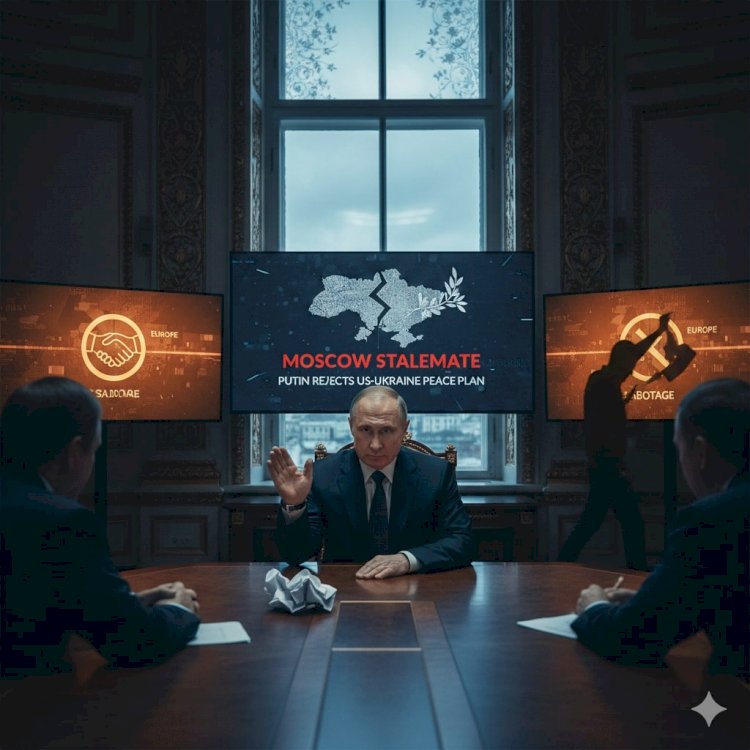
The Kremlin's gilded halls, once the stage for Cold War chess, hosted a diplomatic deadlock on December 2, 2025, as Russian President Vladimir Putin dismissed a revised US-Ukraine peace proposal after marathon discussions with American envoys Steve Witkoff and Jared Kushner. The five-hour session—ending past midnight—yielded "no compromise," according to Putin's aide Yuri Ushakov, with Moscow digging in on territorial demands and accusing European allies of derailing the process. As Ukraine's President Volodymyr Zelenskyy warned against deals "behind Kyiv's back," the impasse exposes fractures in Trump's high-stakes mediation, threatening to prolong Europe's deadliest conflict since World War II and casting shadows over holiday hopes for de-escalation.
Kremlin's Cold Shoulder: Five Hours, Zero Yield
The talks, shrouded in secrecy after a ceremonial Red Square stroll, centered on a 19-point framework honed in Florida last weekend between US and Ukrainian officials—a trimmed version of the original 28-point draft that irked Kyiv with its concessions on Crimea and Donbas. Witkoff, Trump's real estate scion envoy, and Kushner, the former advisor with Middle East dealmaking cred, presented the revisions: phased de-escalation zones under UN watch, mutual force reductions sans hard caps, and a tilt toward Ukraine's rebuild from €300 billion in frozen Russian assets.
Ushakov, emerging bleary-eyed, painted a picture of "constructive" dialogue but stark divides. "Compromises haven't been found yet," he told reporters, pinpointing territory as the thorn: Russia insists on full Donetsk and Luhansk control, plus Zaporizhzhia and Kherson swaths—demands Kyiv deems non-negotiable. Economic lures, like joint ventures splitting asset profits 50-50, drew cautious nods, but Putin—speaking hours before—lashed Europe as the saboteur. "Europe is preventing the US administration from achieving peace," he charged at a VTB forum, deeming their "unacceptable" security guarantees a blockade. "Russia doesn't intend to fight Europe, but if Europe starts, we are ready right now."
The Kremlin's opacity—agreeing to withhold details—fuels suspicions of stalling. Peskov, the spokesman, promised footage of the opener but dodged substance, while Chepa, a Duma deputy, urged the US to "reaffirm fundamental positions" from August's Alaska summit—code for Moscow's maximalism.
Zelenskyy's Defiant Dispatch: "No Games Behind Our Backs"
From Kyiv's fortified bunkers, Zelenskyy struck a vigilant note. "We take these talks with utmost seriousness," he posted after a debrief with envoy Rustem Umerov, who huddled with Witkoff in Florida. Yet caveats abounded: "Everything must be fair and open—no games behind Ukraine's back." The revisions—easing NATO bans to a "European security architecture" and allowing Western peacekeepers—won tentative Kyiv backing, but Zelenskyy reiterated red lines: no territorial cessions, no amnesty for atrocities, and ironclad guarantees against re-invasion.
European heavyweights echoed the caution. Germany's Friedrich Merz hailed the "Munich-proof" tweaks as a "significant modification," while Britain's Keir Starmer pledged troops for any ceasefire. France's Emmanuel Macron decried "destructive actions" by unnamed actors—code for Moscow—urging a G20 sideline revolt. NATO's Mark Rutte stressed Ukraine's "strongest possible position" in talks, as Brussels drafts a human-rights anchor for any accord. Hungary's Viktor Orbán, ever the outlier, gloated at the discord, blocking asset loans in a veto spree.
Putin's Poker Play: Battlefield Gains and Blame Game
Putin's pre-meeting bravado betrayed calculation. At the forum, he boasted Russian "advances" in Pokrovsk—claiming "overexaggeration" per Ukrainian MP Oleksiy Goncharenko—and threatened Ukrainian ports' "sea navigation." "Without just peace, hatred will not fade," he intoned, yet framed Europe as the warmonger, their demands "absolutely unacceptable." Analysts like Abbas Gallyamov, a former Putin speechwriter, see flexibility: "If Trump presses, Putin will end the fighting"—but only on terms ceding Donbas fully and demilitarizing Ukraine.
The Kremlin, per ISW assessments, exploits vagueness to mask obstruction: rejecting iterations since November's 28-point leak for failing maximalism. Duma hawks like Zhuravlev envision US-Russia "fait accompli" forcing Europe's hand, while Sobolev warns of protracted war until NATO falters. Milbloggers undermine imminence, but Putin deflects: sanctions "won't push compromises," he claimed, showcasing economic resilience amid 7,000 weekly casualties.
Frontline Frostbite: No Pause Amid Diplomatic Deadlock
As envoys dined in Moscow's opulence, Ukraine's east bled. Russian drones hammered Odesa overnight, claiming 12 lives and halting grain ships; Ukrainian artillery dueled Donetsk's mud, per frontline reports. Zelenskyy's "victory plan"—long-range strikes, NATO path—fizzles against US fatigue, with Rubio musing "end the war while helping Ukraine be safe forever." Yet Trump's "no deadline" stance—per November 30 remarks—hints at patience, or ploy.
Amnesty urges a "rights framework," tying peace to war crimes trials, while ex-NATO chief Stoltenberg floats interim cessions for breath. For Bucha survivors and Mariupol mothers, the stall is sabotage: "Russia buys time for winter wins," fumed Goncharenko.
Stalled Tracks: From Geneva Glow to Moscow Murk
December's diplomacy, from Geneva's refinements to Moscow's rebuff, tests Trump's dealmaker myth. Zelenskyy eyes a White House visit "soon," but Russia's silence screams skepticism. As alpine hopes fade to Siberian chill, the talks teeter: thaw or trench? Putin watches, Europe whispers, Kyiv endures. In this December of dead ends—from MH370's depths to Tehran's haze—Ukraine's parley hangs threadbare. Will Moscow yield, or yield nothing? The clock ticks; the frontlines burn.