
Echoes from the Abyss: Malaysia Revives MH370 Hunt After 11 Years of Silence
 content-team
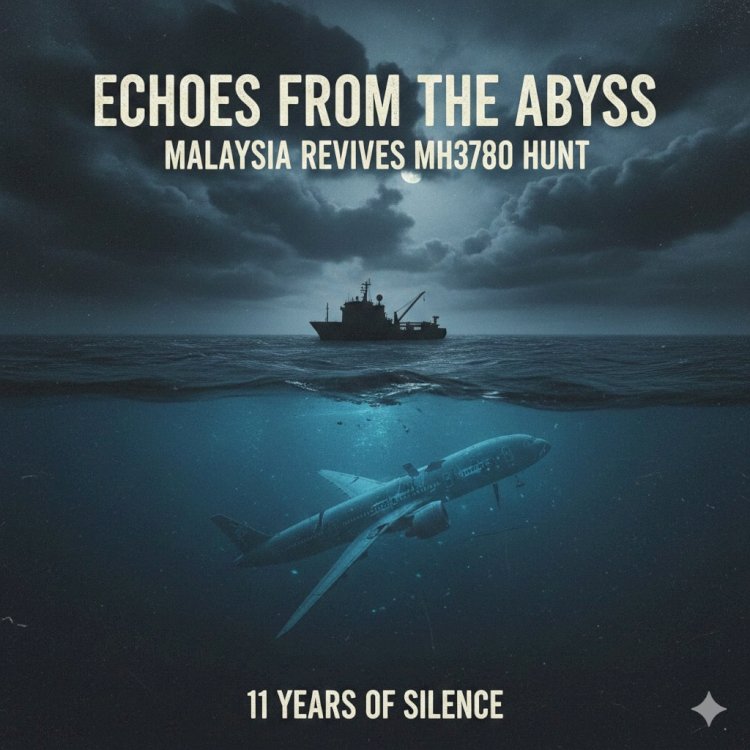
The vast, unforgiving expanse of the southern Indian Ocean, long a graveyard for the Malaysia Airlines Flight MH370 mystery, is set to echo with renewed purpose as Malaysia announced on December 3, 2025, the resumption of the search for the vanished Boeing 777—more than a decade after it disappeared with 239 souls aboard. Partnering once more with U.S.-based Ocean Infinity under a "no-find, no-fee" pact, the Malaysian Transport Ministry confirmed operations will kick off on December 30, targeting a refined 15,000-square-kilometer swath deemed the "highest probability" zone. This fourth major expedition, suspended in April due to brutal weather, reignites hope for families still haunted by unanswered questions, but skeptics warn it may unearth only more heartbreak in aviation's most enduring enigma.
A Ghost Flight's Grim Timeline: From Vanishing to Vague Debris
It was March 8, 2014, when MH370 lifted off from Kuala Lumpur International Airport bound for Beijing—a routine red-eye with 227 passengers from 14 nations and 12 Malaysian crew. At 1:19 a.m., over the South China Sea, the Boeing 777-200ER blinked off radar, only to reappear briefly on military scopes veering west over the Malay Peninsula. Satellite "handshakes" placed it on a southern arc into the remote Indian Ocean, where fuel exhaustion doomed it to a presumed crash. Debris—a flaperon washed up on Réunion Island in 2015, barnacle-crusted wing fragments on Madagascar—confirmed a watery end, but the black boxes, cockpit voice recorder, and motive remain shadows.
Past hunts devoured $200 million: Australia's 2014-17 effort scoured 120,000 square kilometers fruitlessly; Ocean Infinity's 2018 "no-cure, no-pay" probe covered 112,000 square kilometers with autonomous subs, yielding zilch. A 2022 drift study pinpointed a "broken ridge" hotspot near 35°S 92°E, but seasonal gales halted the latest bid in April 2025 after weeks of futile scans. Now, with advanced hydrophones and AI-driven drift models, Ocean Infinity returns for 55 intermittent days, scanning intermittently to dodge monsoons. "We've refined the target based on new data—no stone unturned," Transport Minister Anthony Loke vowed in a Kuala Lumpur briefing.
Ocean Infinity's Return: Tech Titans Tackle the Deep
Ocean Infinity, the Texas firm behind 2018's deep-dive drama, brings a fleet of unmanned vessels—Seabed Constructor II and Armada 15—armed with AUVs that plumb 6,000-meter depths at 5 knots. Their "no-find, no-fee" model—$70 million payout only on discovery—aligns incentives, with intermittent ops from December 30 to February 2026 minimizing weather woes. CEO Oliver Plunkett hailed the "breakthrough analytics" narrowing the 15,000-square-kilometer zone: "Debris patterns, current models, and WSPR radio signals suggest this arc's southern terminus."
Families, clustered in Beijing and Kuala Lumpur, cling to slivers of solace. Grace Nathan, whose mother boarded MH370, told Reuters: "Eleven years of silence—every day a wound. This could be closure, or cruelty." Of the 153 Chinese aboard—mostly families on vacation—grief lingers in annual vigils; Malaysian kin, too, demand "truth, not theories." Conspiracy whispers—pilot suicide, hijacking, shoot-down—persist, but official probes finger a deliberate diversion, the "why" eternally elusive.
Global Echoes: Aviation's Scarlet Letter and a Nation's Reckoning
MH370's scar runs deep. Malaysia Airlines, scarred by the 2014 twin tragedies (MH17 downed over Ukraine months later), rebranded as MAB in 2015, shedding the "curse." Boeing, under fire for 737 MAX woes, faced $1 billion in fallout scrutiny. The saga spurred ICAO reforms—real-time tracking mandates for oceanic flights by 2025—but gaps linger: no global black box locator beacon, no satellite voice relay.
Critics question the revival's viability. Aviation analyst Paul Edwards, in a CNN op-ed, called it "hope over hard science—11 years of currents have scattered evidence like confetti." Yet Loke, eyes steely, countered: "We owe the families finality; no shelf-life on justice." With 2026's budget hinging on oil revenues, the $70 million gamble—if successful—could salve national pride; failure risks ridicule.
Horizon of Heartache: Will the Deep Yield Its Secrets?
As Ocean Infinity's drones plunge into the abyss, MH370's specter stirs dormant debates: remote hijack? Cyber foul play? The 239 lost—engineers, students, a cellist bound for tour—haunt as symbols of fragility in our connected skies. For kin like Li Eryou, whose brother vanished, it's personal: "One call, one photo—anything to bury him."
In Kuala Lumpur's humid haze, where murals of smiling faces fade, the resumption whispers promise. December 30 dawns not with fanfare, but quiet resolve. Will the ocean relent, or retain its riddle? For aviation's lost legion, the search endures—a beacon in the blue, flickering against oblivion.