DeepSeek Nvidia Controversy Escalates: US Accuses Chinese AI Firm of Training on Banned Blackwell Chips
 content-team
February 24, 2026
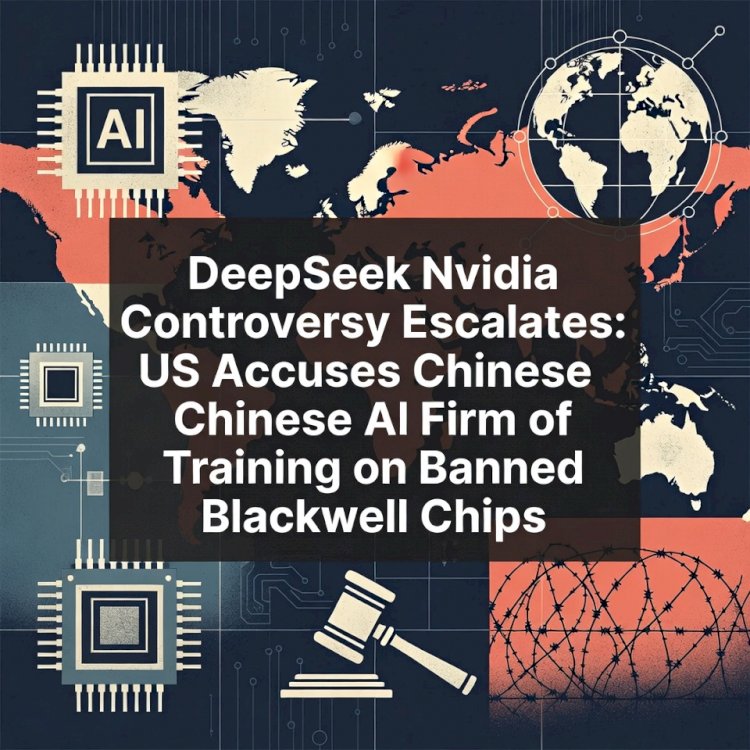
Tensions between the United States and China over advanced artificial intelligence technology intensified today as a senior Trump administration official accused Chinese startup DeepSeek of training its forthcoming AI model on Nvidia's most powerful Blackwell chips, hardware explicitly barred from export to China under longstanding US restrictions.
The allegation, reported by Reuters, suggests a potential violation of export controls aimed at preventing Beijing from accessing cutting-edge semiconductors that could bolster military or strategic capabilities. Officials believe the Blackwell GPUs are likely housed in DeepSeek's data center in Inner Mongolia, with indications that technical markers revealing their use may have been removed to obscure origins.
Export Controls at the Heart of the Dispute
US policy prohibits shipments of Nvidia's Blackwell series to China, a measure enforced by the Commerce Department to maintain American leadership in AI development. While President Trump briefly considered allowing scaled-down versions of the chip for approved Chinese buyers, he later reversed course to reserve top-tier technology for US entities and allies.
DeepSeek, a Hangzhou-based AI firm known for releasing highly efficient open-source models that rival Western counterparts, has faced repeated scrutiny. Earlier reports from late 2025 claimed the company obtained thousands of banned Blackwell units through complex smuggling networks involving fake data centers and third-country intermediaries. Nvidia swiftly dismissed those claims as unsubstantiated, stating no evidence supported allegations of phantom facilities or illicit transfers.
Congressional Pressure and Technical Assistance Claims
The controversy builds on prior revelations. In January 2026, House Select Committee on China Chairman John Moolenaar highlighted documents showing Nvidia provided extensive technical support to DeepSeek, including optimized co-design of algorithms, frameworks, and hardware. This assistance reportedly enabled major training efficiency gains, allowing DeepSeek-V3 to complete full training with far fewer GPU hours than typical US frontier models.
Moolenaar's letter to Commerce Secretary Howard Lutnick raised alarms that such collaboration contributed to models later adopted by Chinese military entities, despite Nvidia treating DeepSeek as a standard commercial partner at the time.
Additional accusations include DeepSeek's alleged use of Southeast Asian shell companies to access restricted chips and remote data centers, as well as claims from other sources that the firm operates clusters far larger than publicly disclosed to circumvent sanctions.
Broader Implications for AI Race and National Security
DeepSeek's breakthroughs, achieved with reportedly constrained resources, have challenged assumptions about the necessity of massive compute power for advanced AI. Models like DeepSeek-V3 and subsequent releases demonstrated competitive performance at lower costs, sparking debates over whether US export curbs inadvertently spurred Chinese innovation through necessity.
Yet Washington views these developments with growing concern. Bipartisan efforts in Congress, including proposed legislation restricting DeepSeek on government devices, reflect fears of data privacy risks, intellectual property theft via distillation techniques, and military applications. Federal agencies have already barred the firm's tools from official use.
Nvidia maintains compliance with all regulations and has not confirmed any prohibited transactions. The company continues navigating a delicate landscape, balancing commercial interests in China with national security imperatives.
Uncertain Path Forward Amid Heightened Scrutiny
As DeepSeek prepares to unveil its next model potentially within days, the accusations underscore deepening US-China tech rivalry. Enforcement of export controls faces new tests, with officials signaling closer monitoring of chip flows and potential tightening of loopholes.
The episode highlights persistent challenges in restricting dual-use technologies while preserving global innovation. Whether the claims lead to formal investigations, penalties, or policy shifts remains unclear, but the controversy ensures AI hardware remains a flashpoint in bilateral relations for the foreseeable future.