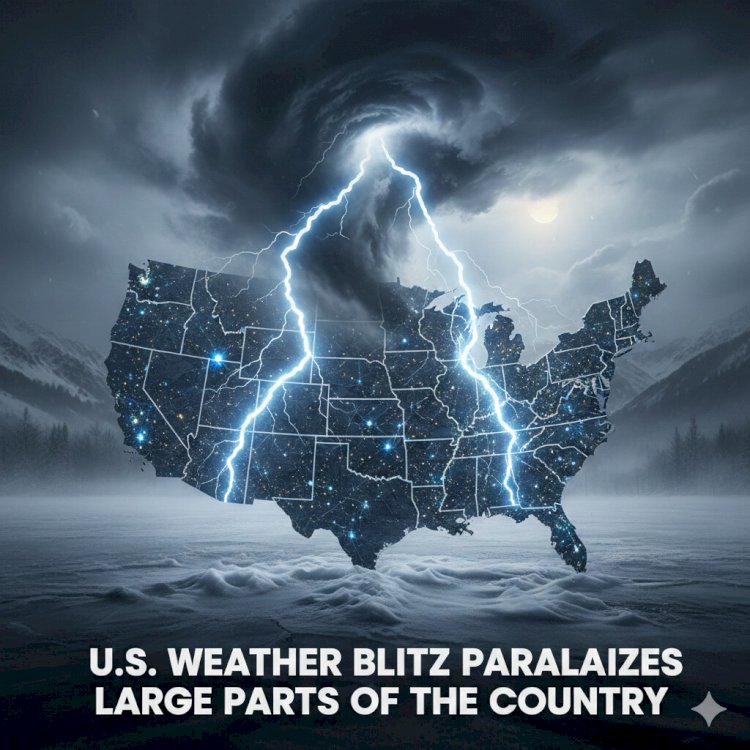
U.S. Weather Blitz Paralyzes Large Parts of the Country
 content-team
Nationwide Storm Sweeps In
A sweeping weather blitz is gripping the United States, bringing record snow, ice, and dangerously low temperatures to a wide swath of states. From the Great Plains to the Eastern Seaboard, communities are experiencing disruptions to daily life, transportation, and essential services as extreme winter conditions continue to intensify.
Snow and Ice Create Hazardous Conditions
Heavy snowfall combined with freezing rain has left highways, bridges, and streets treacherous. Snowdrifts and ice accumulation are making travel nearly impossible in many areas, forcing school closures, workplace shutdowns, and widespread road closures. Residents are being urged to avoid unnecessary travel while authorities work to clear main roads and maintain public safety.
Transportation Systems Grind to a Halt
Airports are facing massive delays and cancellations as crews struggle to deice planes and keep runways safe. Rail and bus lines report significant interruptions as snow and ice block tracks and highways. Thousands of travelers are stranded or forced to adjust plans, and emergency services are stretched thin assisting those impacted by severe weather.
Emergency Measures and Public Safety Alerts
State and local governments have issued emergency declarations, activating National Guard units and emergency crews. Shelters have been opened for those without heat or safe refuge, and residents are warned to prepare for extended periods of isolation in some areas. Officials emphasize that the storm’s combination of snow, ice, and sub-zero temperatures makes even short trips highly dangerous.
Power Outages Affect Millions
The winter storm has caused widespread power outages as ice-laden tree limbs fall on lines and strong winds strain the electrical grid. Many homes and businesses are without heat or electricity, while utility companies work around the clock to restore service. In rural areas, crews face the added challenge of navigating snow-blocked roads to reach affected communities.
Extreme Cold Poses Health Risks
Following the storm, temperatures have plunged far below seasonal averages, creating life-threatening conditions. Wind chills in some regions are extreme, prompting health officials to warn of frostbite and hypothermia risks. Residents are encouraged to stay indoors, wear appropriate winter clothing, and check on vulnerable neighbors.
Communities Face Mounting Challenges
Snow removal crews, utility workers, and emergency responders are laboring under harsh conditions to maintain access to essential services. Hospitals and emergency centers are handling higher volumes of weather-related incidents, including traffic accidents, falls, and cold-related injuries. Shelters are at capacity in some areas as citizens seek refuge from the harsh elements.
Economic and Social Impacts Widen
The storm has disrupted commerce, supply chains, and daily routines. Retailers report increased demand for heating supplies, food, and emergency equipment, while transport delays affect deliveries of goods nationwide. Schools and public services remain closed in multiple regions, and workers in outdoor industries have been forced to halt operations until conditions improve.
Ongoing Recovery and Preparedness
Meteorologists warn that the storm system may continue to affect additional regions as cold air masses persist. Snow, ice, and freezing rain are expected to challenge recovery efforts in affected areas. Communities are bracing for continued disruption, while authorities stress the importance of preparedness, caution, and careful monitoring as the weather blitz continues to impact millions of Americans.