Trump Announces 15% Global Tariffs to Protect American Industries
 content-team
February 21, 2026
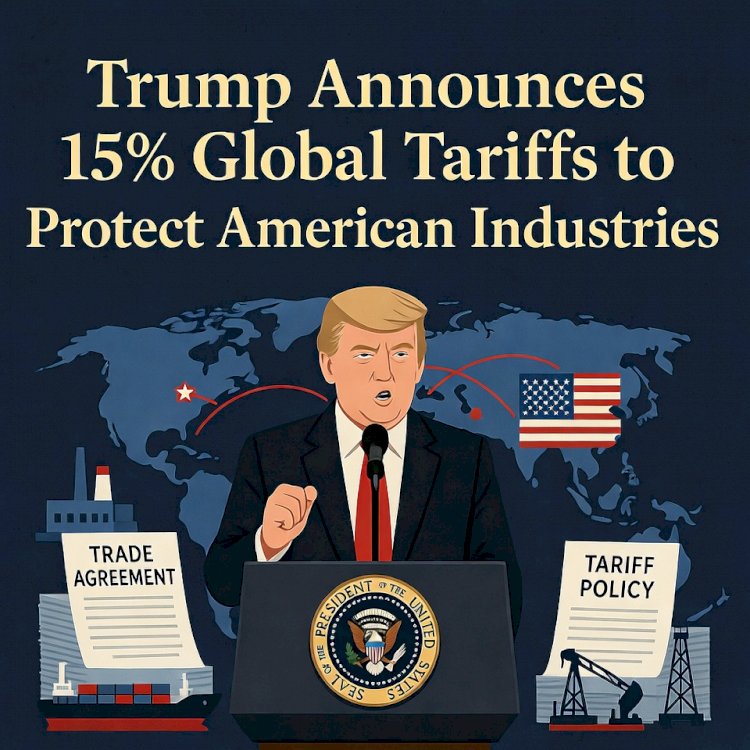
President Donald Trump signed an executive order today imposing a 15% tariff on all non-exempt imports entering the United States, effective March 1, 2026. The measure, described by the White House as "the largest and fairest trade adjustment in American history," aims to protect domestic manufacturing, reduce trade deficits, and generate revenue for infrastructure and defense spending.
The tariffs will apply to goods from all countries except those with existing free trade agreements (Canada, Mexico, South Korea) and strategic allies meeting specific criteria on trade balance and defense contributions. Exemptions include critical minerals, pharmaceuticals, and certain agricultural products deemed essential for national security or consumer affordability.
Trump defended the move during a Rose Garden signing ceremony flanked by Commerce Secretary Howard Lutnick and U.S. Trade Representative Jamieson Greer. "For decades, foreign countries have ripped off America with unfair trade practices. No more. This 15% tariff levels the playing field, brings jobs home, and makes other nations pay their fair share," Trump said. He estimated the tariffs would generate $400 billion annually in revenue, which he pledged to direct toward rebuilding U.S. manufacturing hubs, border security, and tax cuts for working families.
The order builds on Trump's first-term tariffs but expands them globally rather than targeting specific countries. Administration officials stated that nations can negotiate exemptions or reductions by addressing U.S. concerns on intellectual property theft, currency manipulation, and NATO spending shortfalls.
Economic and Market Impact
U.S. stock markets reacted negatively to the announcement: the Dow Jones Industrial Average fell 2.1%, the S&P 500 dropped 1.8%, and the Nasdaq Composite declined 2.4% in afternoon trading. Shares of major importers and retailers (Walmart, Target, Amazon) led the losses, while domestic manufacturers (Boeing, General Motors, U.S. Steel) posted modest gains.
The U.S. Chamber of Commerce warned that the tariffs "could trigger retaliatory measures from trading partners and raise costs for American consumers and businesses." The National Retail Federation estimated an additional $120 billion in annual costs for U.S. households on imported goods.
International reactions were swift and critical. China’s Foreign Ministry called the tariffs "economic bullying" and promised "firm countermeasures." The European Commission stated it would "defend EU interests" and consider WTO challenges. Canada and Mexico invoked USMCA dispute mechanisms, while South Korea requested urgent consultations.
Political Response
Republican congressional leaders praised the move as "bold action to protect American workers." Senate Majority Leader John Thune (R-SD) stated: "This is the America First policy voters demanded." Democratic leaders condemned it as "reckless" and predicted higher prices for everyday goods. House Minority Leader Hakeem Jeffries (D-NY) said: "This is a tax on American families disguised as trade policy."
Several business groups, including the U.S. Auto Alliance and Consumer Technology Association, announced plans to lobby for exemptions or delays. Analysts expect legal challenges from affected industries, potentially reaching the Supreme Court given recent rulings limiting executive tariff authority.
The tariffs come amid ongoing U.S.-Iran tensions and stalled trade talks with the European Union. White House officials indicated that revenue from the duties would fund military modernization and border security enhancements.
The full economic impact will unfold over the coming months as supply chains adjust and potential retaliatory tariffs from abroad take effect. For now, the 15% global tariff order represents one of the most sweeping trade actions of Trump's second term, reshaping global commerce and testing alliances in an already fractured international economy.