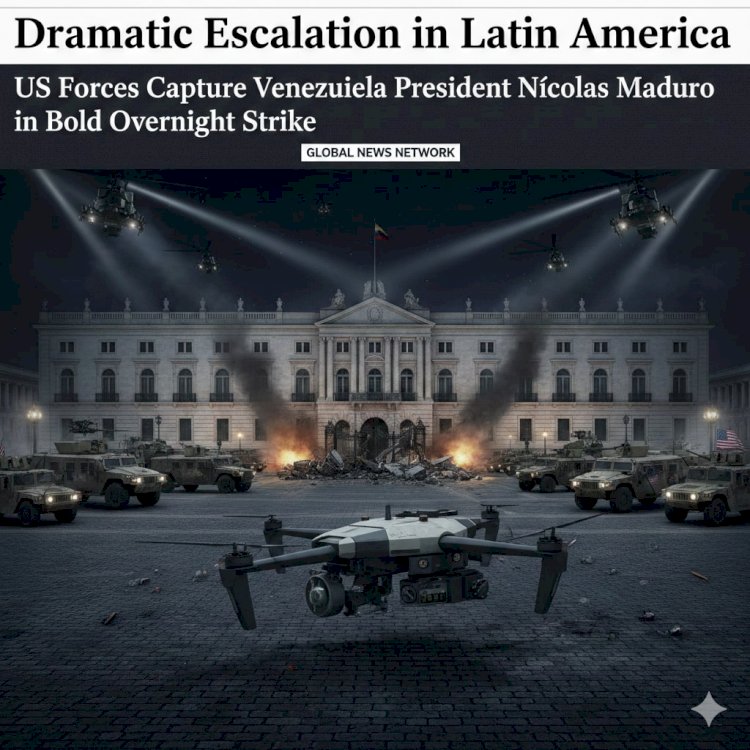
Dramatic Escalation in Latin America: US Forces Capture Venezuelan President Nicolás Maduro in Bold Overnight Strike
 content-team
January 03, 2026
In a stunning early morning announcement, President Donald Trump revealed that United States military forces executed a large-scale operation in Venezuela, resulting in the capture of President Nicolás Maduro and his wife, Cilia Flores, who were subsequently flown out of the country.
Operation Details Emerge: Strikes Target Key Sites
The operation commenced in the pre-dawn hours, with reports of multiple explosions rocking Caracas and surrounding areas, including the capital's largest military complex, Fuerte Tiuna. Fires broke out at several installations, and low-flying aircraft were observed over the city, triggering widespread blackouts and panic among residents.
Trump described the action on Truth Social as a "large scale strike" conducted in coordination with U.S. law enforcement. He stated the couple had been captured and removed from Venezuela, with further details promised at an upcoming press conference from Mar-a-Lago.
U.S. officials confirmed elite special forces, including elements of Delta Force, led the capture, marking a culmination of months of escalating pressure under Operation Southern Spear, a campaign targeting alleged narcotrafficking networks linked to the Maduro regime.
Background: From Maritime Strikes to Direct Intervention
The move follows a series of U.S. actions beginning in September 2025, including strikes on suspected drug-smuggling vessels in the Caribbean and Pacific, and a naval quarantine on Venezuelan oil tankers. Maduro, long indicted in the U.S. on drug trafficking charges, has been accused by the Trump administration of heading a criminal enterprise.
Recent weeks saw intensified rhetoric, with Trump vowing to dismantle cartels operating with regime protection.
Immediate Fallout: Emergency Declared in Venezuela
Venezuelan officials swiftly declared a national state of emergency, condemning the strikes as "imperialist aggression" aimed at regime change and resource seizure. Defense Minister Vladimir Padrino López vowed resistance to any foreign presence, while the government reported casualties among military personnel and civilians.
Vice President Delcy Rodríguez assumed interim leadership amid uncertainty over Maduro's exact whereabouts prior to capture.
Global Reactions Pour In
Condemnation was swift from allies of Venezuela. Russia labeled the action "armed aggression," Iran decried a violation of sovereignty, and Cuba demanded international intervention. China expressed grave concern over regional stability.
Latin American neighbors varied in response, with some expressing shock and others monitoring developments closely. European leaders called for restraint and dialogue.
In the U.S., bipartisan questions arose over congressional authorization, though some Republicans praised the operation's success. Secretary of State Marco Rubio indicated no further military action is anticipated now that Maduro faces U.S. justice.
What Lies Ahead for Venezuela
With Maduro in custody and likely headed for trial on longstanding charges, Venezuela enters uncharted territory. Opposition figures hailed the development as a potential turning point, while loyalists rallied in defiance.
Oil markets braced for volatility given Venezuela's reserves, and humanitarian concerns mounted over potential instability.
This bold strike represents the most direct U.S. intervention in Latin America in decades, reshaping hemispheric dynamics and testing international norms on sovereignty and extradition.
As details continue to unfold, the world awaits Trump's full briefing and Venezuela's next steps in a post-Maduro era.