
Winter's Whisper: Solstice 2025 Marks Shortest Day, Longest Night as World Welcomes Seasonal Shift
 content-team
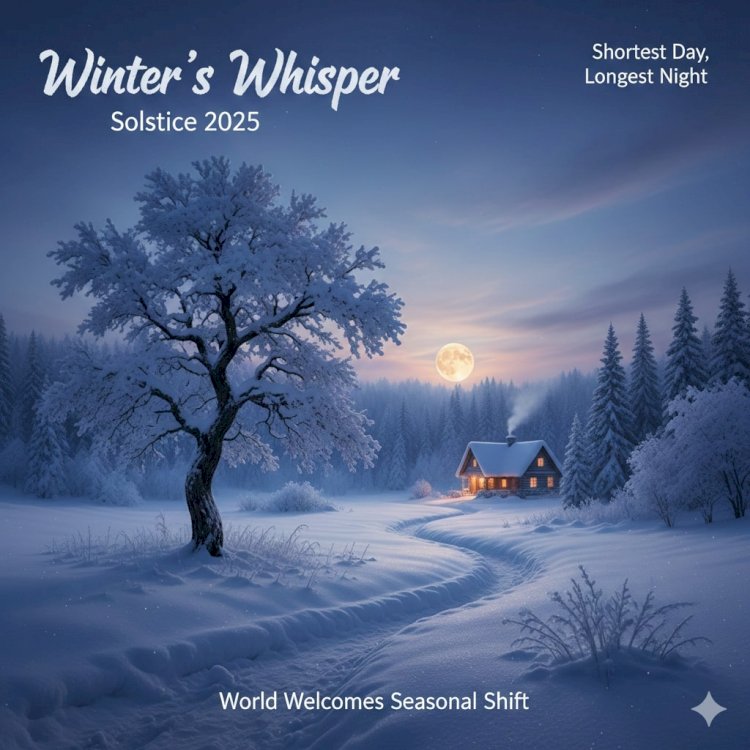
The celestial clock ticked to its annual extreme on December 21, 2025, as the Winter Solstice graced the Northern Hemisphere at precisely 10:03 UTC (5:03 a.m. EST), ushering in the shortest day and longest night of the year. Known as the December solstice or hibernal solstice, this astronomical milestone—when Earth's axial tilt reaches its maximum 23.44° away from the Sun—bathes the North Pole in 24-hour twilight while the Antarctic Circle basks in midnight sun. From Stonehenge's ancient alignments to modern lantern festivals in Taipei, humanity paused to honor the turning point: a promise of lengthening days ahead, even as winter's grip tightens.
The Science of Solstice: Earth's Tilt and the Sun's Standstill
At the heart of the solstice lies elegant orbital mechanics. Earth's 23.5° tilt, combined with its elliptical path around the Sun, creates seasonal swings. On December 21, the North Pole tilts farthest from solar rays, yielding just 6 hours and 45 minutes of daylight in New York City, 5 hours in London, and a mere flicker above the Arctic Circle. The word "solstice" derives from Latin solstitium—"sun stands still"—as the Sun appears to halt its southward march before reversing.
In the Southern Hemisphere, it's summer solstice: Buenos Aires enjoys nearly 15 hours of light, Sydney's beaches swarm under peak sun. The Tropic of Capricorn (23.44°S) receives direct overhead rays, marking the Sun's southernmost declination.
NASA's Solar Dynamics Observatory captured the moment: Earth's day side skewed toward darkness in the north, a visual reminder of our planet's precarious balance.
Ancient Echoes: From Stonehenge to Saturnalia
Humanity has revered the solstice for millennia. At England's Stonehenge, thousands gathered at dawn—despite drizzly skies—for the Heel Stone alignment, druids in white robes chanting as the Sun peeked through clouds. Sweden's Lucia processions lit Stockholm with candle-crowned girls; China's Dongzhi Festival feasted on tangyuan dumplings symbolizing reunion.
Iran's Yalda Night blended poetry and pomegranates; Native American tribes like the Hopi marked Soyal with kachina dances. Rome's Saturnalia—feasting and gift-giving—influenced Christmas, while modern Wiccans celebrate Yule's rebirth.
Modern Marvels: Festivals and First Light
2025's solstice sparked global glows. Taiwan's Pingxi Sky Lantern Festival released thousands of wishes into the night; Japan's Toshikoshi rituals cleansed for renewal. In Alaska, Fairbanks—plunged into polar night—hosted aurora vigils, the shortest day a canvas for northern lights.
Cities leaned green: Copenhagen's solstice bike parade promoted sustainability; Toronto's Kensington Market Festival fused multicultural feasts. Astronomers like Neil deGrasse Tyson tweeted: "Today, the Sun 'dies' for three days—then reborn. Ancient myth, modern science."
The Promise of Return: Light After Longest Night
Though December 21 dawns darkest, it's rebirth's harbinger: days lengthen from tomorrow, culminating in June's summer solstice. "The wheel turns—hope renews," reflected a Stonehenge visitor.
In a year of upheavals—from geopolitical thaws to celestial spectacles—the solstice whispers constancy: darkness yields to dawn. As Earth tilts back toward light, humanity mirrors the motion—pausing, reflecting, readying for renewal. Winter's here—but spring's seed stirs. The longest night passes; the light returns.