
Netanyahu's Defiant Expansion: Israel Approves 19 New West Bank Settlements Amid Global Outcry
 content-team
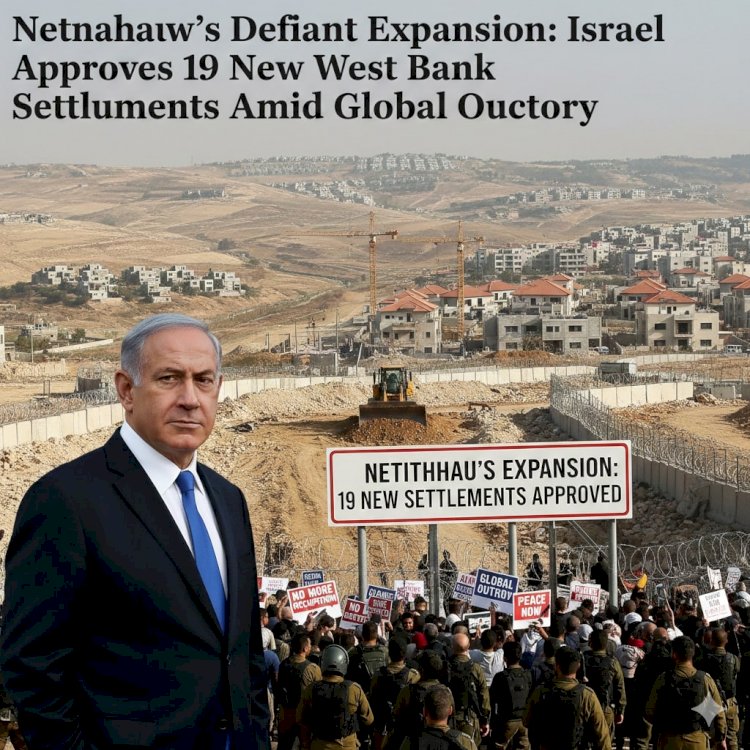
Jerusalem's halls of power echoed with controversy on December 21, 2025, as Israeli Prime Minister Benjamin Netanyahu's cabinet greenlit the construction of 19 new Jewish settlements in the occupied West Bank, marking the largest single expansion in nearly three decades and defying international calls for restraint. The move, spearheaded by far-right Finance Minister Bezalel Smotrich, raises the total number of settlements to 210—a staggering 50% increase under Netanyahu's current term—and comes amid stalled Gaza peace talks, escalating violence that has claimed over 1,100 Palestinian lives since October 2023, and fresh condemnations from the UN, EU, and U.S. allies. As Palestinians decry it as "land theft" and Netanyahu hails it as "biblical justice," the decision threatens to ignite fresh unrest in an already volatile region.
Cabinet's Christmas Gambit: 19 Settlements in a Single Stroke
The approval, announced during a late-night cabinet session, targets strategic pockets across the West Bank, including areas near East Jerusalem, Hebron, and Nablus—zones long contested for their proximity to Palestinian population centers. Smotrich, whose Religious Zionism party holds sway in Netanyahu's coalition, framed the expansion as "strengthening our eternal hold on Judea and Samaria," using the biblical terms for the territory. The settlements, projected to house up to 5,000 new residents, include infrastructure upgrades like roads and utilities, potentially costing NIS 2 billion ($530 million) over five years.
Netanyahu, fresh from a December 15 Knesset address vowing "no concessions to terror," defended the move as a response to "ongoing threats" from Palestinian militants, citing recent clashes that killed two Israeli soldiers near Ramallah. "We build where we belong—this is our land, forever," he stated in a post-cabinet briefing. The timing—coinciding with Hanukkah's close and Christmas eve—drew accusations of political theater, with opposition leader Yair Lapid blasting it as "cynical sabotage of peace efforts."
The UN Security Council condemned the decision in an emergency statement Monday, calling it "a grave violation of international law" and urging reversal to salvage two-state viability. EU foreign policy chief Kaja Kallas warned of "targeted sanctions" on settlement backers, while U.S. Secretary of State Marco Rubio urged "restraint" but stopped short of condemnation, aligning with Trump's pro-Israel stance.
West Bank's Worsening Wound: Violence Surges Amid Expansion
The settlements' green light lands amid a blood-soaked backdrop: Israeli forces killed two Palestinians, including a 16-year-old, in West Bank raids on December 21, bringing the death toll to 1,101—229 children—since October 7, 2023, per Palestinian health ministry figures. Demolitions of Palestinian homes spiked 25% in November, displacing 150 families near new settlement sites. "This isn't building—it's bulldozing our future," said Ramallah resident Amina Khalil, whose olive grove was razed last week.
Human rights groups like Amnesty International decried the expansion as "systematic dispossession," warning it cements apartheid-like conditions. Smotrich, unapologetic, posted on X: "More homes, more security—Judea and Samaria forever!" The move follows a December 10 approval for 764 homes in three existing settlements, part of a broader campaign the New York Times detailed as "escalating control" through uprootings and barriers.
Gaza's stalled truce—bogged in territorial disputes—mocks Netanyahu's "peace through strength" mantra, with critics accusing him of sabotaging talks to appease his coalition's hardliners.
Global Backlash: Sanctions, Protests, and a Diplomatic Deep Freeze
The international storm was swift. The EU's 27 foreign ministers, meeting virtually Monday, floated asset freezes on Smotrich and Itamar Ben-Gvir, Israel's national security minister, for "inciting violence." UN Secretary-General António Guterres condemned it as "illegal under international law," urging a freeze. Jordan and Egypt warned of "regional instability," while Palestinian President Mahmoud Abbas appealed to the ICC for "immediate action."
Protests flared: thousands marched in Ramallah and Amman, chanting "End the occupation"; Tel Aviv's anti-government demos drew 5,000, demanding Netanyahu's ouster. In New York, pro-Palestinian groups picketed the Israeli consulate, while AIPAC lobbied U.S. Congress for support.
Trump's administration, pro-Israel but pragmatic, urged "dialogue" via Rubio, but insiders whisper frustration over Netanyahu's timing amid Middle East deals.
Legacy of Land: Netanyahu's Vision vs. Global Verdict
Netanyahu's tenure—spanning 17 years—has seen settlements balloon from 250,000 to over 500,000 residents, a cornerstone of his "Greater Israel" ethos. Allies like Smotrich hail it as "biblical fulfillment"; foes see ethnic cleansing. With elections looming in 2026, the expansion bolsters his base but alienates centrists.
As December deepens, the West Bank's wounds widen: clashes claimed three more lives Tuesday. Peace whispers fade; protests roar. Netanyahu's settlements stand—but at what shattered cost? The Middle East's map redraws; its people pay the price.