Tehran's Silent Storm: Iran's Economic Crisis Deepens with Record Rial Lows and Soaring Inflation in 2025
 content-team
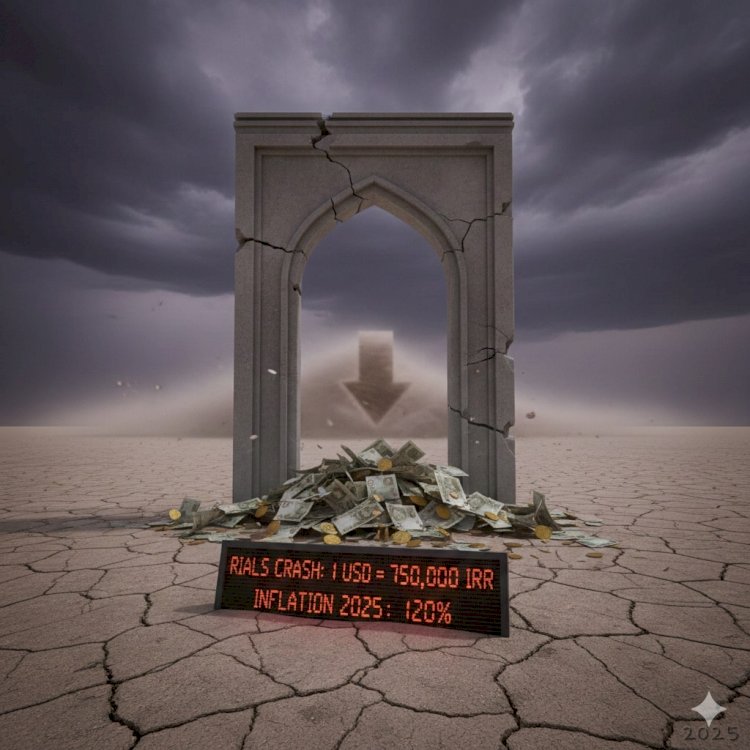
Tehran, Iran's vibrant capital of over 9 million, has become ground zero for a deepening economic catastrophe in late 2025, as the rial plunged to historic lows—exceeding 1.3 million to the dollar in December—and inflation surged past 40%, eroding livelihoods and fueling social discontent. The crisis, rooted in decades of mismanagement, corruption, and intensified international sanctions, has seen food prices skyrocket, power blackouts worsen, and capital flight accelerate, with state media and even regime insiders issuing rare warnings of impending unrest. As President Masoud Pezeshkian grapples with a "fundamentally broken" system, ordinary Iranians face a daily battle for basics, while the regime's "resistance economy" rhetoric rings increasingly hollow against the backdrop of shrinking GDP and a looming recession.
Rial's Relentless Fall: Currency Collapse Hits New Depths
The rial's freefall dominated December headlines, breaching 1.3 million per dollar by mid-month—a staggering drop from 920,000 in August—amid renewed UN sanctions and stalled nuclear talks. The currency's erosion, accelerated by snapback measures in October, has wiped out purchasing power: imported staples like rice and meat now cost double last year's prices, with point-to-point food inflation hitting 64.3% in October per state-run Jahan-e San'at. "Every day the dollar rises, our savings vanish," lamented a Tehran shopkeeper in a viral video, echoing millions facing a minimum wage equivalent to under $130 monthly.
The Central Bank's interventions—selling reserves and cracking down on crypto exchanges—failed to stem the tide, with black-market rates spiking despite official caps. Economists like Masoud Nili, advisor to former president Rouhani, described the economy as "fundamentally broken" from corruption and oil over-reliance, warning of hyperinflation risks if unchecked.
Inflation Inferno: Prices Soar, Poverty Widens
Inflation, entrenched above 30% since 2018, flared anew in 2025: the IMF forecasts 43% for the year, with food and beverages up 64% point-to-point. Mazut burning in power plants—amid gas shortages—compounded woes, triggering rolling blackouts that halted factories and darkened homes for 3-4 hours daily. "We're in darkness literally and figuratively," said a Shiraz resident, as energy crises cost billions in lost output.
Poverty grips wider: 57% face malnourishment per ministry reports, with 50% of males 25-40 unemployed or disengaged. Capital flight hit $9 billion in spring alone, totaling $80 billion over 2018-2024. Sanctions bite hard: oil exports discounted heavily to China, revenues diverted to military amid regional tensions.
Regime's Reckoning: Admissions, Cuts, and Unrest Fears
Even state outlets sound alarms: Kayhan accused Pezeshkian's cabinet of "artificial hikes," while parliament impeached the economy minister in March. Fuel subsidy trims—quadrupling super-grade prices in November—sparked protests, echoing 2019's deadly unrest. Supreme Leader aides urge "immediate action," but reforms stall: a toman redenomination (striking four zeros) remains symbolic without structural shifts.
Protests simmer: transport strikes, teacher walkouts, and viral #IranCantBreathe campaigns. "The crisis is self-made—corruption and war spending," opposition voices claim from exile.
Global Gaze: Sanctions' Shadow and Recovery Roadblocks
UN snapbacks in October—tied to nuclear defiance—froze assets and arms deals, slashing growth forecasts to 0.3% for 2025 per IMF. World Bank predicts contraction: -1.7% in 2025, -2.8% in 2026. China's oil buys mitigate, but discounts drain revenues.
Experts urge JCPOA revival for relief, but Trump's hardline and Israel's strikes dim prospects. "Recovery hinges on diplomacy and reform," says Clingendael analyst.
A Nation's Nadir: From Blackouts to Breaking Point
For Iranians, the crisis is visceral: empty shelves, unaffordable medicine, youth exodus. "We're surviving, not living," a Tehran mother told DW. As 2025 closes, the economy teeters—hyperinflation looms, unrest brews.
In Tehran's shadowed streets, hope flickers faint. The regime braces; the people persevere. Iran's storm rages—will 2026 bring calm, or collapse?