
Pioneering Framework Takes Hold: South Korea Enforces World's First Comprehensive AI Regulation Law
 content-team
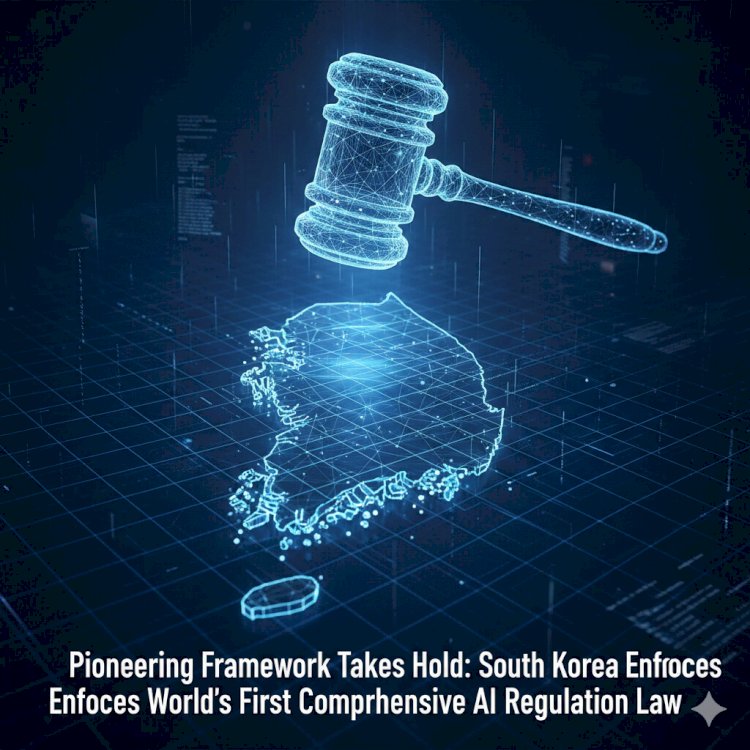
South Korea marked a global milestone today as its amended Basic Act on Artificial Intelligence officially entered full force, establishing what officials describe as the world's first comprehensive legal framework governing artificial intelligence development and use.
Landmark Enforcement: From Passage to Implementation
The legislation, originally passed in early 2025 and now fully effective, consolidates previous fragmented rules into a unified structure. It aims to foster innovation while building public trust through mandatory safeguards, transparency measures, and ethical guidelines.
Key provisions include requirements for high-impact AI systems to undergo rigorous risk assessments, implement human oversight, and ensure explainability in decision-making processes. Developers and deployers of advanced models must now conduct impact evaluations, particularly in sensitive domains.
High-Risk Sectors Under Strict Scrutiny
The law designates ten critical areas for heightened oversight, including nuclear power operations, criminal justice proceedings, credit and loan evaluations, educational assessments, employment decisions, biometric identification, and medical diagnostics. In these fields, AI systems face stricter compliance obligations to prevent bias, discrimination, and unintended harm.
New rules mandate watermarking or labeling for AI-generated content, especially deepfakes and synthetic media, to combat misinformation and protect intellectual property.
Balancing Innovation and Safety: Government Stance
Officials from the Ministry of Science and ICT emphasized that the framework supports South Korea's ambition to remain a leading AI powerhouse. By providing clear guidelines, the act seeks to attract investment and talent while addressing societal risks from rapid technological advancement.
The government has established dedicated oversight bodies to monitor compliance, offer guidance to businesses, and handle violations through graduated penalties ranging from warnings to fines.
Industry Response: Concerns Over Compliance Costs
While tech giants and established players have welcomed regulatory clarity, many startups and smaller enterprises expressed alarm over potential burdens. Industry groups warned that extensive documentation, auditing, and assessment requirements could strain resources and slow innovation in a highly competitive sector.
Some companies called for phased implementation or exemptions for low-risk applications to avoid stifling South Korea's vibrant AI ecosystem.
Global Spotlight: A Model or a Cautionary Tale?
South Korea's swift rollout outpaces phased approaches in other regions, including the European Union's staggered AI Act timeline extending into 2027. International observers are closely watching enforcement outcomes, viewing the Asian nation's experiment as a potential blueprint for balanced AI governance worldwide.
Critics noted gaps, such as limited provisions addressing AI's energy consumption and environmental footprint, amid growing concerns over data center demands.
As the law takes root, South Korea positions itself at the forefront of responsible AI deployment, navigating the delicate tension between cutting-edge progress and societal protection in an era of transformative technology.
With enforcement mechanisms now active, businesses across sectors are racing to adapt, setting the stage for what could become a defining chapter in global AI regulation.