
Rafah Border Crossing Finally Reopens: Humanitarian Aid Flows Into Gaza for First Time in Nearly Two Years
 content-team
February 01, 2026
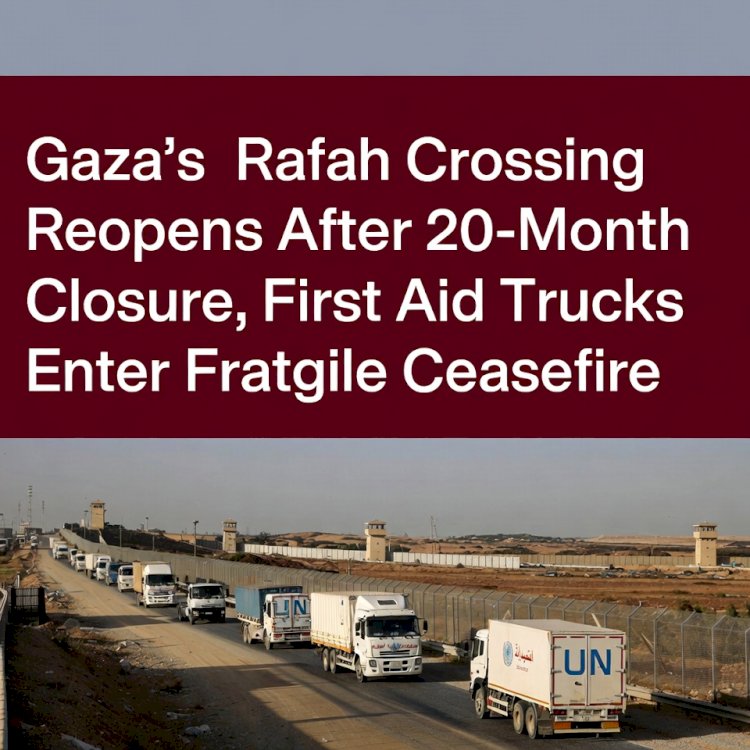
After more than twenty months of near-total closure, the Rafah crossing between Gaza and Egypt officially reopened Sunday morning, permitting the entry of humanitarian aid convoys into the besieged Palestinian territory. The milestone, a core component of the U.S.-mediated ceasefire agreement, arrived amid cautious optimism that the truce might hold long enough to begin addressing Gaza's dire humanitarian crisis, even as both sides traded accusations of violations in the preceding days.
Egyptian border authorities reported that the first wave of trucks—approximately 130 vehicles loaded with food staples, medical supplies, hygiene kits, fuel for hospitals and water facilities, and winter clothing, crossed into Gaza after rigorous security inspections. United Nations relief agencies described the development as a critical step toward easing acute shortages that have left hundreds of thousands of Gazans facing malnutrition, untreated injuries, and exposure to winter cold.
First Convoys Cross Under Strict Oversight
The trucks, coordinated by the United Nations, the Palestine Red Crescent Society, and Egyptian logistics teams, carried priority items including wheat flour, cooking oil, powdered milk, antibiotics, surgical dressings, insulin, dialysis filters, water purification chemicals, and blankets. Several vehicles transported spare parts for damaged generators and desalination equipment, vital for restoring partial electricity and clean water in heavily hit areas.
Palestinian officials at the Gaza side of Rafah welcomed the arrivals, though they stressed that current volumes fall far short of pre-war daily averages and remain insufficient to meet the scale of need. The crossing is expected to operate six days per week with daily quotas subject to security clearances, similar to arrangements at Kerem Shalom.
Ceasefire Preconditions Met After Hostage Remains Returned
Israel permitted the reopening after confirming the recovery and repatriation of the final set of Israeli hostage remains, satisfying a key condition embedded in the agreement. The U.S.-brokered framework, announced in late 2025 and advanced under President Donald Trump and envoy Steve Witkoff, ties humanitarian access improvements, including Rafah's reactivation, to reciprocal steps such as hostage-prisoner exchanges and partial Israeli force redeployments.
Hamas confirmed compliance with the remains handover while reiterating its commitment to the broader truce. Israeli authorities emphasized that continued operation of Rafah depends on preventing weapons smuggling and maintaining calm along the border.
Violence Shadows Opening Day
Saturday's Israeli airstrikes, which killed at least 25 Palestinians according to Gaza health officials, cast a shadow over the border's reactivation. Hamas condemned the attacks as deliberate ceasefire violations aimed at undermining progress, while the Israeli military stated the strikes targeted militant infrastructure following alleged breaches by Palestinian groups.
Despite the fresh bloodshed, both parties allowed the Rafah operation to proceed, suggesting a mutual interest in preserving the agreement's humanitarian elements even amid ongoing friction.
International Pressure Mounts for Sustained Access
Aid organizations and donor governments hailed the reopening as long overdue but urged immediate scaling of deliveries. The United Nations estimates that Gaza requires at least 500–600 aid trucks daily to meet basic needs, a target far above current projections. Reconstruction of war-damaged border infrastructure, clearance of unexploded ordnance, and repair of internal roads remain urgent priorities to enable efficient distribution.
Qatar, Turkey, and several European nations have pledged additional funding contingent on predictable access through Rafah and other crossings. The World Health Organization highlighted the collapse of Gaza's healthcare system, with many hospitals operating at less than 30 percent capacity due to fuel shortages and lack of medicines.
Fragile Hope for Gaza's Civilians
For the enclave's 2.3 million residents, most of whom remain displaced, the sight of aid trucks rolling through Rafah offered a rare tangible sign of relief after prolonged isolation and destruction. Whether the crossing can function consistently, at meaningful scale, and without interruption will serve as a crucial barometer of the ceasefire's viability.
As mediators push forward with preparations for the agreement's second phase, including deeper Israeli withdrawals and discussions on interim governance, the Rafah reopening stands as both a humanitarian victory and a precarious test of whether diplomacy can outpace violence in one of the most devastated conflict zones on earth.