Royal Reunion: MBS and Trump Rekindle Alliance Amid Arms Deals and Khashoggi Shadows
 content-team
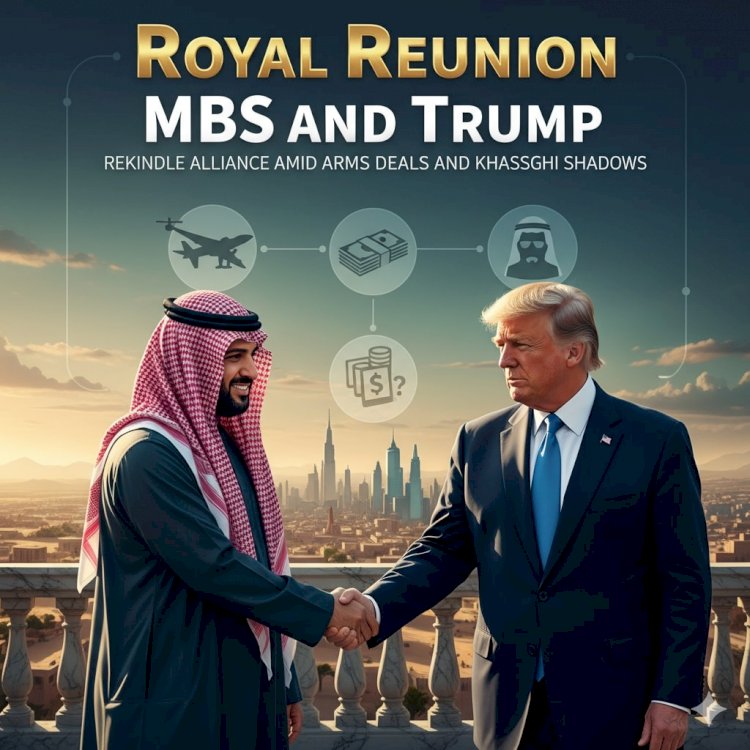
Washington's corridors of power hummed with familiar tension and pageantry on November 18, 2025, as Saudi Crown Prince Mohammed bin Salman—known globally as MBS—stepped onto the South Lawn of the White House for his first visit in over seven years. Greeted by a cannon salute, military flyover, and a beaming President Donald Trump, the de facto ruler of the oil-rich kingdom arrived not as a pariah, but as a pivotal partner in America's Middle East chessboard. Yet beneath the red-carpet pomp, the ghost of Jamal Khashoggi loomed large, testing the limits of old friendships and new ambitions.
A Lavish Welcome: From Orb Glow to Oval Office Grip
The ceremony was lavish, bordering on spectacle. Trump, ever the showman, orchestrated a Marine band performance, horseback officers bearing Saudi and American flags, and a black-tie dinner later that evening with U.S. business titans and lawmakers. "We've been really good friends for a long period of time. We've always been on the same side of every issue," Trump declared, flashing portraits of past presidents to his guest as they settled into the Oval Office.
This isn't a full state visit—MBS isn't technically head of state, with that mantle held by his aging father, King Salman—but the trappings rivaled one. It's a sequel to their 2017 Riyadh extravaganza, complete with the infamous glowing orb photo op alongside Egypt's Abdel Fattah el-Sisi. Back then, MBS was the brash young reformer; today, at 40, he's a battle-tested architect of Vision 2030, Saudi Arabia's blueprint for a post-oil future.
Defense Deals and Dollar Dreams: The High-Stakes Agenda
Talks kicked off with fighter jets scorching the agenda's front burner. Trump announced the green light for F-35 sales to Riyadh—a controversial leap that could reshape Middle East aerial supremacy, tilting the scales against rivals like Iran. "This is a game-changer," Trump boasted, framing it as a bulwark against regional threats.
Beyond arms, MBS is angling for U.S. tech lifelines: access to cutting-edge semiconductors for Saudi's AI ambitions and backing for civil nuclear power plants to diversify from black gold. A potential U.S.-Saudi defense pact dangles as the carrot, promising ironclad security guarantees in exchange for deeper economic ties. MBS upped the ante, pledging to balloon Saudi investments in America to nearly $1 trillion—fueling everything from infrastructure to Trump's beloved golf resorts.
And then, the elephant in the room: Israel's shadow. Trump pressed for Saudi entry into the Abraham Accords, dangling normalization with the Jewish state as a diplomatic crown jewel. MBS, ever the pragmatist, reportedly seeks ironclad U.S. commitments to deter Israeli "aggression," amid Gaza's lingering fires and Houthi drones buzzing the Red Sea.
Khashoggi's Echo: "Things Happen" and a Reporter's Rebuke
No reunion would be complete without the 2018 Istanbul consulate horror that branded MBS a global outcast. As reporters grilled the duo on Khashoggi's brutal murder—allegedly greenlit by the crown prince—Trump swatted it away like a fly. "Things happen, but he knew nothing about it, and we can leave it at that," the president snapped, before turning on ABC's Mary Bruce: "You don't have to embarrass our guest asking a question like this."
The prince, stone-faced, offered no denial, only a nod to shared futures. Hanan Khashoggi, Jamal's niece, decried the welcome as "very painful," while 9/11 families fumed over Saudi links to the attacks. Yet Trump doubled down: "As far as this gentleman is concerned, he's done a phenomenal job."
It's vintage realpolitik. Trump shielded MBS during his first term, dismissing CIA intel as "fake news" and prioritizing petrodollar flows over human rights. Even Biden, who once vowed to make Riyadh a "pariah," fist-bumped the prince in 2022. Now, with Iran's proxies rattling nerves, the U.S. needs Saudi muscle more than ever.
A Volatile Decade's Bookend: From Pariah to Power Broker
This visit caps a turbulent U.S.-Saudi saga. From Trump's 2017 sword dance to Biden's oil-begging trip, the alliance has weathered oil shocks, Yemen quagmires, and Khashoggi's bloodied legacy. MBS, once the reckless visionary behind bone-saw diplomacy, now pitches himself as the kingdom's stabilizer—pumping OPEC+ quotas, hosting AI summits, and eyeing NEOM's sci-fi skyline.
Critics see a whitewash: Amnesty International slammed the "red-carpet treatment" as a betrayal of justice. Supporters hail pragmatic revival, with Trump eyeing Saudi cash to offset America's ballooning deficits.
As MBS departs Wednesday for a Washington investment summit alongside Trump, the subtext is clear: alliances aren't built on apologies—they're forged in fighter jets and forgotten files. In the Oval Office glow, old ghosts may fade, but the Middle East's fault lines? They run deeper than ever.