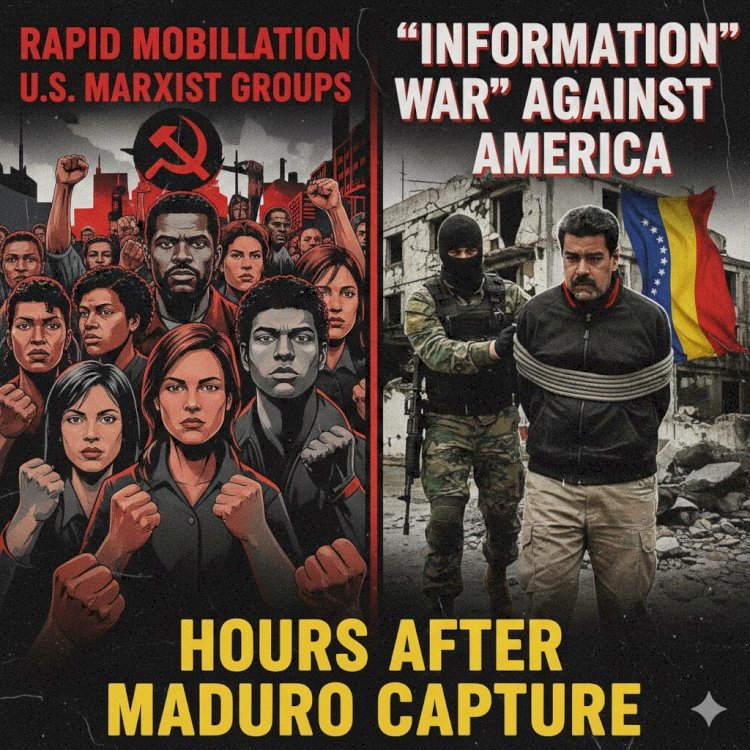
Rapid Mobilization: U.S. Marxist Groups Declare 'Information War' Against America Hours After Maduro Capture
 content-team
January 04, 2026
A coordinated network of self-described Marxist, socialist, and communist organizations in the United States sprang into action within minutes of Nicolás Maduro's capture, launching what they framed as a fierce ideological and propaganda campaign against the U.S. government.
Lightning-Fast Activation: From Raid to Rally Calls
The response began almost immediately after reports of the pre-dawn U.S. military operation in Caracas surfaced. By early morning, key figures and groups flooded social media with denunciations, calling the raid an "act of war," "illegal bombing," and blatant imperialism.
Within hours, slick posters and emergency alerts circulated online, summoning supporters to protests in major cities including New York City's Times Square, Washington D.C., and dozens more across the country. Organizers branded the events an "EMERGENCY DAY OF ACTION" under slogans like "NO WAR ON VENEZUELA" and demands to halt alleged bombings.
Key Players in the Network
Prominent among the mobilizers were groups like the ANSWER Coalition, co-founded by outspoken Marxist Brian Becker, and The People's Forum, led by executive director Manolo De Los Santos. These entities, alongside others such as the Party for Socialism and Liberation and Code Pink, orchestrated the swift rollout of graphics, statements, and street actions.
The campaign echoed long-standing narratives of anti-imperialism, portraying the capture as a capitalist assault on sovereignty and rallying "working-class Americans" to defend Maduro's regime.
Street Protests Erupt Nationwide
By midday Saturday, crowds gathered in multiple locations, chanting against U.S. intervention and waving signs decrying regime change. Demonstrators in Times Square and near the White House amplified claims of aggression, with speakers railing against what they called a rich man's war for oil and resources.
The rapid organization showcased military-like discipline in digital coordination, turning the Maduro extraction into a domestic flashpoint.
Broader Backdrop: Echoes of Past Campaigns
This activation fits a pattern for these networks, which have previously rallied around anti-war causes, social justice movements, and opposition to U.S. foreign policy. The speed of this response—mere hours after the raid—highlighted their readiness to frame the event as part of a larger struggle against American hegemony.
As Maduro faces charges in New York, the domestic backlash intensifies debates over intervention, sovereignty, and ideological battles playing out on U.S. soil.
With protests ongoing and rhetoric escalating, this "second front" underscores how global events can ignite polarized activism at home, promising further confrontations in the days ahead.