Munich Security Conference 2026 Climax: Vance Signals U.S. Policy Shift, Zelenskyy Pleads for More Aid, China Warns Against Confrontation
 content-team
February 15, 2026
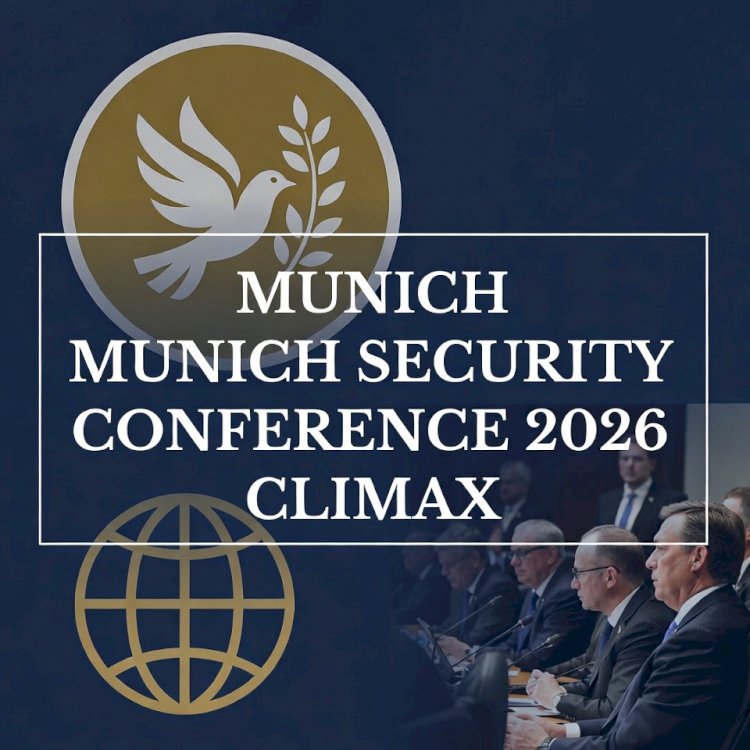
The 62nd Munich Security Conference reached its most intense phase Sunday as U.S. Vice President JD Vance delivered a landmark address outlining the Trump administration's foreign policy priorities, Ukrainian President Volodymyr Zelenskyy made an emotional virtual plea for sustained Western support, and Chinese Foreign Minister Wang Yi issued a pointed warning against escalating bloc confrontation. The final day of the four-day event saw closed-door bilateral meetings, the release of key “Munich Consensuses,” and a growing sense that 2026 may mark a decisive turning point in global security alignments.
Vice President Vance's speech dominated headlines. He reaffirmed U.S. commitment to NATO's Article 5 but insisted that European allies must rapidly increase defense spending to at least 3 percent of GDP and assume primary responsibility for deterring Russia on the continent. “America will remain the arsenal of democracy, but Europe must become its own shield,” Vance stated. He also signaled openness to pragmatic diplomacy with Russia and China when aligned with core U.S. interests, including potential negotiated outcomes in Ukraine that recognize “realities on the ground.”
Ukrainian President Zelenskyy, appearing via secure video link from Kyiv, responded directly to Vance's remarks. He urged Western capitals to maintain and increase military aid, particularly long-range precision weapons, warning that “any pause in support is a pause in survival for millions of Ukrainians.” Zelenskyy called for accelerated delivery of F-16s, ATACMS, and Storm Shadow missiles, arguing that only continued pressure could force Russia to negotiate seriously.
Chinese Foreign Minister Wang Yi delivered a sharp critique of what he termed “bloc confrontation and Cold War mentality.” He advocated for multilateralism, respect for “legitimate security concerns” of all nations, and warned that attempts to contain China would destabilize global supply chains and economic recovery. Wang also reiterated Beijing's position that the Ukraine conflict should be resolved through dialogue rather than prolonged military escalation.
Key Bilateral Meetings and Outcomes
- U.S. Secretary of State Marco Rubio held separate talks with German Chancellor Friedrich Merz, French Foreign Minister Catherine Colonna, and Ukrainian Foreign Minister Dmytro Kuleba, focusing on NATO burden-sharing and Ukraine support timelines.
- Chinese Foreign Minister Wang Yi met with EU High Representative Kaja Kallas and Indian External Affairs Minister S. Jaishankar, emphasizing economic cooperation and opposition to decoupling.
- Israeli Foreign Minister Gideon Sa’ar and Saudi Foreign Minister Faisal bin Farhan continued discussions on Gaza ceasefire monitoring and potential normalization pathways.
- The traditional “Munich Consensuses” were released on Ukraine (calling for sustained military and economic pressure on Russia combined with diplomatic off-ramps), Middle East de-escalation (urging full implementation of recent ceasefires), and Indo-Pacific stability (stressing freedom of navigation and crisis communication mechanisms).
Closing Statements and Overall Assessment
MSC Chairman Christoph Heusgen closed the conference by noting that “the world has entered a new era where hard power, economic coercion, and hybrid threats are again dominant.” He urged participants to move from rhetoric to concrete action on defense spending, energy diversification, technology governance, and diplomatic channels.
German Chancellor Merz echoed the call, stating that “Europe must wake up to the reality that peace is not automatic and security is not free.” U.S. Vice President Vance concluded by reaffirming American leadership while insisting on “fair burden-sharing among allies.”
The 2026 Munich Security Conference will be remembered for its unusually direct exchanges, the clarity of the Trump administration's emerging policy line, and the palpable anxiety among European leaders about reduced U.S. commitment to continental defense. As delegates depart Munich, the real test begins: whether the rhetoric of recalibration translates into coordinated action or accelerates the fragmentation of the post-Cold War security order. Live coverage and final reports remain available on the official MSC website and partner broadcasters.