Gaza Ceasefire Teeters as Deadly Israeli Strikes Kill Dozens in Apparent Breach Ahead of Rafah Reopening
 content-team
January 31, 2026
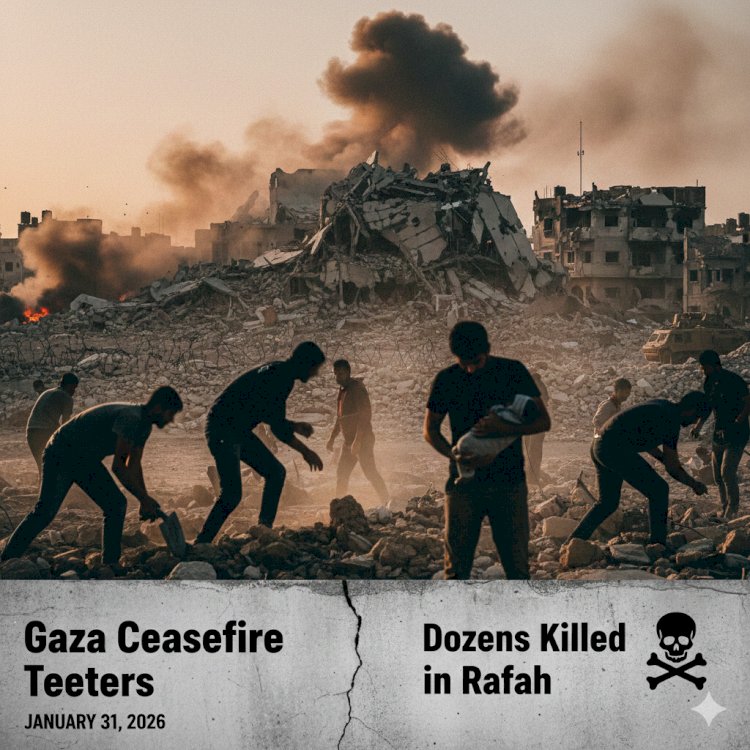
Israeli military operations in Gaza claimed at least 23 to 31 Palestinian lives Saturday, including multiple children, in what Palestinian authorities and Hamas described as flagrant violations of the fragile U.S.-brokered ceasefire that took effect in October. The attacks struck residential areas, an apartment building in Gaza City, a tent camp in Khan Younis, and other sites across the enclave, marking one of the highest single-day death tolls since the truce began.
Hospitals receiving the bodies reported the casualties, with medical sources citing strikes that hit densely populated zones and displaced persons shelters. The violence unfolded just one day before Israel is scheduled to reopen the Rafah border crossing with Egypt for the first time since May 2024, a key provision of the agreement intended to boost humanitarian access.
Mutual Accusations Fuel Tensions
Israel's military stated that the strikes targeted militant infrastructure and responded to what it described as ceasefire violations by Hamas the previous day. Officials accused Palestinian groups of activities breaching the terms, though specifics remained limited in public statements. The IDF has maintained that post-ceasefire operations address ongoing threats and occur in response to provocations.
Hamas condemned the attacks as a renewed and blatant violation of the accord, calling on the United States and other mediators to compel Israel to cease fire immediately. The group highlighted the civilian toll, including women and children, and argued that the strikes undermine progress toward the ceasefire's second phase.
Palestinian officials reported that since the truce's implementation on October 10, Israeli forces have carried out hundreds of incidents they classify as breaches, including near-daily shelling, gunfire on civilians, incursions beyond designated lines, and demolitions. Gaza authorities have tallied over 500 Palestinian deaths attributed to Israeli actions during the ceasefire period, with many incidents occurring far from the so-called yellow line demarcation.
Rafah Reopening Looms Amid Fragile Progress
The impending reopening of Rafah represents a critical step in the agreement's implementation, allowing greater flow of aid and potentially people in and out of Gaza after prolonged restrictions. The crossing's activation was delayed until the recovery of the last Israeli hostage's remains, a condition now met according to recent developments.
Despite this milestone, the latest violence has heightened skepticism about the truce's durability. The ceasefire framework, advanced under U.S. mediation including announcements from President Donald Trump and envoy Steve Witkoff, envisions a transition to Phase Two involving Hamas disarmament, further Israeli withdrawals, and establishment of interim governance structures under international oversight.
Critics from Palestinian sides argue that persistent Israeli military actions contradict commitments to de-escalation and humanitarian relief. International observers note ongoing challenges, including restricted aid delivery, infrastructure collapse, and civilian hardships exacerbated by the cold weather and prior destruction.
Broader Context of a Tenuous Truce
The agreement has facilitated hostage and detainee exchanges, partial Israeli redeployments, and increased humanitarian corridors in its initial phase. Yet intermittent violence has persisted, with each side routinely accusing the other of infractions. Reports indicate hundreds of documented incidents since October, contributing to a death toll that continues to climb even as diplomatic efforts push forward.
As Phase Two preparations intensify, including formation of administrative bodies and security handovers, Saturday's strikes serve as a stark reminder of the ceasefire's precarious nature. Mediators face mounting pressure to enforce compliance and prevent escalation that could derail the broader plan for stabilization and eventual political resolution.
With Rafah's reopening set for Sunday, attention now turns to whether the latest bloodshed will prompt renewed restraint or further unravel the fragile calm. Civilians in Gaza, already enduring severe shortages and displacement, bear the immediate brunt as the path to lasting peace remains uncertain and fraught with risk.