
Syrian Government and Kurdish Forces Seal Comprehensive Truce with Phased Integration Deal
 content-team
January 31, 2026
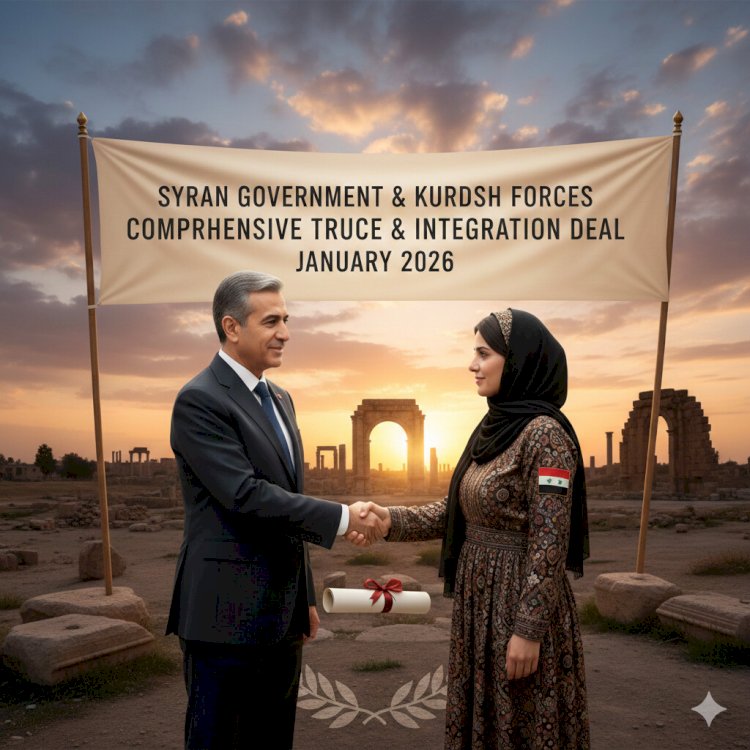
The Syrian transitional government and the Kurdish-led Syrian Democratic Forces have reached a landmark comprehensive agreement that establishes a permanent ceasefire across northeastern Syria and outlines a structured path for integrating SDF fighters and civilian institutions into the national state framework. Announced jointly on Friday, the deal ends weeks of intense clashes that saw government forces recapture vast territories and brings a significant step toward unifying the fractured country under President Ahmed al-Sharaa's leadership.
The accord, mediated in part by U.S. envoy Tom Barrack, averts what analysts feared could become a protracted and bloody confrontation in the northeast, while addressing long-standing issues of Kurdish autonomy, resource control, and security responsibilities.
Ceasefire Takes Hold After Series of Extensions
The agreement builds on earlier temporary pauses, including a 14-point framework announced on January 18, a four-day truce declared January 20, and a 15-day extension on January 24. Those measures largely held despite mutual accusations of violations, creating space for negotiations that culminated in Friday's broader pact.
Under the new terms, both sides commit to an immediate and comprehensive ceasefire on all fronts. Forces will withdraw from contact lines, reducing the risk of accidental escalations. The deal emphasizes strict adherence to prevent any resumption of hostilities that plagued the interim periods.
Integration Roadmap Targets Military and Administrative Unity
Central to the agreement is a phased integration process. SDF members will join the Syrian army and security forces as individuals rather than as intact units, preserving state monopoly on legitimate armed power. Civilian institutions in Kurdish-administered areas, particularly in Al-Hasakah Governorate, will fold into national structures.
The government will assume control of key assets including international border crossings, oil and gas fields, and detention facilities holding Islamic State suspects and families. Interior Ministry security forces will deploy to major cities like al-Hasakah and Qamishli to ensure stability during the transition.
Implementation begins immediately, with a one-month timeline set for regaining control of critical infrastructure and administrative handover. The plan aims to preserve Syria's territorial integrity while incorporating Kurdish contributions to national security and governance.
International Community Hails Historic Progress
U.S. Special Envoy Tom Barrack described the accord as a profound and historic milestone toward national reconciliation, unity, and enduring stability. The United Nations Commission of Inquiry on Syria welcomed the ceasefire, urging all parties to protect civilians, facilitate displaced persons' returns, and address urgent humanitarian needs such as food, water, and electricity in the northeast.
France, Germany, the United Kingdom, and the United States issued a joint statement supporting the extension of earlier pauses and calling for swift permanent arrangements based on the January 18 principles. Egypt and other regional actors expressed similar backing, emphasizing Syria's sovereignty and inclusive political processes.
Challenges Remain in Fragile Post-Conflict Phase
While the truce marks a major de-escalation, questions linger about enforcement mechanisms, potential spoilers, and the pace of integration. Previous short-term ceasefires saw scattered fighting, and the success of this broader deal will depend on mutual compliance and continued diplomatic engagement.
The agreement also raises implications for ISIS detention camps, where security transitions could affect containment of remaining jihadist threats. Humanitarian organizations stress the need for unimpeded aid access amid ongoing civilian hardships in the region.
With this pact, Syria edges closer to resolving one of its most persistent internal divisions since the fall of the previous regime. The coming weeks will test whether the ceasefire solidifies into lasting peace or faces new pressures as implementation unfolds.
For millions in northeastern Syria, the quieting of weapons offers immediate relief after intense fighting, while the path ahead focuses on rebuilding under a unified state structure that respects diverse communities and prioritizes stability.