Fed's December Pivot: Central Bank Poised for Quarter-Point Cut Amid Lingering Inflation Concerns
 content-team
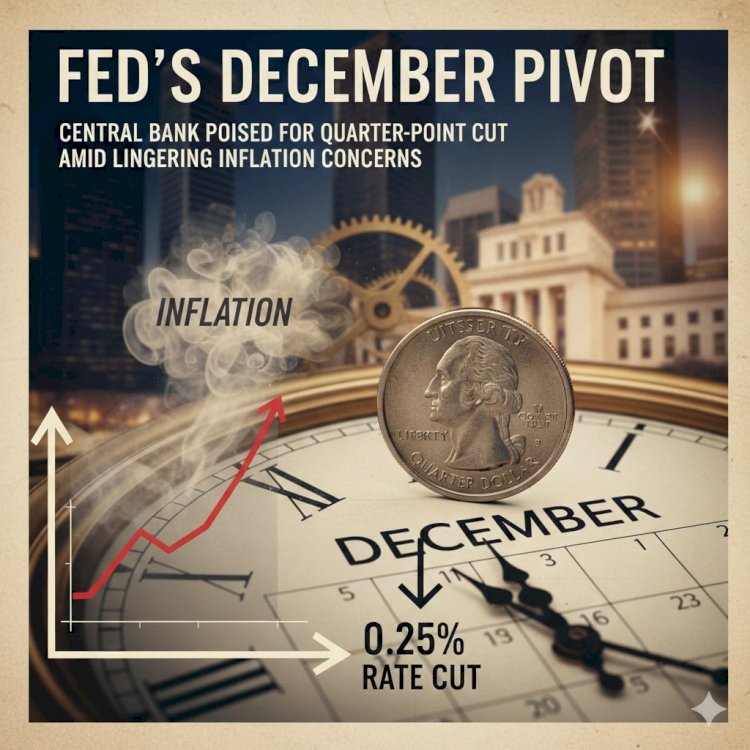
The Federal Reserve's Federal Open Market Committee (FOMC) convenes for its final policy meeting of 2025 on December 9-10, with markets and economists overwhelmingly anticipating a 25-basis-point reduction in the federal funds rate to a range of 3.50%-3.75%. This would mark the third consecutive cut since September, signaling the Fed's ongoing effort to support a cooling labor market while navigating persistent inflation pressures above the 2% target. As Chair Jerome Powell prepares to deliver the post-meeting statement and press conference on Wednesday at 2:00 p.m. ET, the decision—coupled with an updated Summary of Economic Projections (SEP)—could set the tone for monetary policy into 2026, influencing everything from mortgage rates to stock market volatility.
Dovish Signals Amid Hawkish Dissent: A Divided FOMC
October's minutes, released November 19, revealed a committee split on the pace of easing: while a majority favored the 25-basis-point cut to 3.75%-4.00%, dissenters like Stephen I. Miran pushed for a bolder 50-basis-point slash, citing softening employment data, while Jeffrey R. Schmid advocated a pause to monitor inflation risks. "The balance of risks has shifted, but we must remain vigilant," Miran noted in a separate speech. Fast-forward to December: incoming data has tilted further dovish. November's jobs report added 199,000 nonfarm payrolls—below expectations but signaling resilience—while unemployment ticked up to 4.2%, and core PCE inflation held at 2.7% year-over-year.
A Reuters poll of over 100 economists, conducted December 4, shows 82% consensus for the December cut, with medians forecasting two more in 2026, bringing the rate to 3.00%-3.25% by year-end. CME FedWatch Tool odds stand at 87% for 25 basis points, up from 75% a week ago, buoyed by comments from New York Fed President John Williams and Governor Christopher Waller emphasizing "modestly restrictive" policy room. "We've made progress on inflation, but the labor market warrants continued support," Williams said in a November 26 address.
Yet hawks persist: Atlanta Fed President Raphael Bostic, in a December 1 interview, cautioned against "over-easing," pointing to sticky services inflation. The SEP's "dot plot"—updated quarterly—will be scrutinized for clues on 2026's trajectory, with markets pricing in 50 basis points total next year.
Powell's Presser: Balancing Act Between Growth and Guardrails
Powell's 2:30 p.m. ET press conference will dissect the statement's nuances: expect emphasis on "data-dependent" policy, with risks "balanced" but tilted toward employment. The Fed's dual mandate—maximum employment and 2% inflation—hangs in equilibrium: GDP grew 2.8% annualized in Q3, but Q4 forecasts hover at 2.1%, per Atlanta Fed's GDPNow. Consumer spending, buoyed by holiday retail up 3.2% in November, tempers recession fears, but manufacturing PMI at 48.5 signals contraction.
Global headwinds add pressure: Europe's ECB and UK's BoE meet December 18, likely holding rates amid sticky inflation; Japan's BoJ follows December 19, eyeing hikes. U.S. fiscal stimulus under Trump—tax cuts and tariffs—looms as an inflation wildcard, with Powell likely to stress independence.
Market Jitters: Stocks Dip, Bonds Rally on Cut Bets
Wall Street's anticipation has fueled volatility: the S&P 500 shed 0.8% Friday on tariff jitters, but futures point to a 0.5% rebound Monday. The 10-year Treasury yield dipped to 3.92%, reflecting cut pricing, while the dollar index held at 105.5. Tech giants like Apple (+1.2% last week) eye rate relief for capex, but banks like JPMorgan (-2.1%) brace for compressed margins.
Economists like JPMorgan's Michael Feroli predict the cut "anchors expectations," but warn of a "higher for longer" 2026 if inflation reaccelerates. Berenberg counters: conditions for December easing "won't fully align until Q1," forecasting a pause.
The Bigger Picture: Fed's Final 2025 Flourish
This December conclave caps a tumultuous year: three cuts totaling 75 basis points from a 5.25%-5.50% peak, taming inflation from 9.1% in June 2022. Powell's "soft landing" narrative endures, but risks lurk—geopolitical flares in Ukraine and the Middle East, U.S. debt ceiling brinkmanship. As the FOMC adjourns, the world watches: a quarter-point trim may soothe markets, but Powell's words will steer the ship into 2026's uncertain seas. In the Fed's steady hand, December's decision isn't just a cut—it's a compass for the calendar ahead.