Venezuela on the Brink: Maduro's Defiance Meets Trump's Naval Might in Escalating Crisis
 content-team
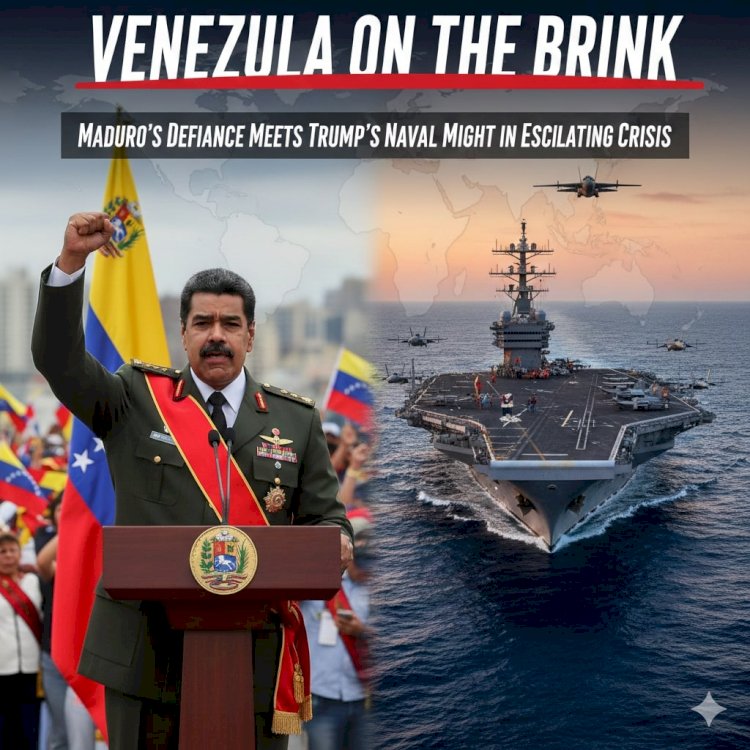
The Caribbean Sea has become a theater of high-stakes brinkmanship as Venezuela and the United States edge closer to confrontation in late 2025, with President Nicolás Maduro mobilizing troops and brandishing a ceremonial sword in defiance rallies while a massive US naval force—including the aircraft carrier USS Gerald R. Ford—patrols just 180 km off the Venezuelan coast. The standoff, fueled by Trump's designation of Maduro-linked groups as terrorists, deadly US strikes on alleged drug boats, and the recent seizure of an oil tanker, has sparked fears of military escalation, refugee surges, and regional instability. Maduro accuses Washington of plotting regime change to seize oil reserves; Trump frames it as a war on "narco-terrorism." As both leaders dig in, the crisis—rooted in economic collapse, disputed elections, and sanctions—threatens to boil over.
Maduro's Sword-Waving Spectacle: Rallying the Faithful Amid "Invasion" Fears
In a fiery display on November 30, Maduro, clad in fatigues, wielded the sword of independence hero Simón Bolívar during a Caracas military parade, inspecting tanks, missiles, and thousands of troops while vowing to turn any US incursion into "another Vietnam or Afghanistan." "The gringo empire wants our oil and sovereignty—they will drown in a sea of fire!" he roared to cheering crowds, announcing nationwide drills and activating 300,000 reservists. State media looped radar images of the US fleet, portraying it as an "invasion armada."
The rhetoric peaked after Trump's November ultimatum—reportedly offering safe passage if Maduro resigned immediately, which he rejected demanding global amnesty. Maduro's counter: airspace bans on several airlines, suspension of Trinidad gas deals after a US warship docked there, and accusations of "psychological terrorism" and "piracy."
Trump's "Maximum Pressure" Reloaded: Warships, Strikes, and Sanctions
Trump's campaign, dubbed "Operation Tidal Wave," has amassed unprecedented firepower: the Ford carrier with 90+ aircraft, destroyers, submarines, F-35 jets, and 15,000 personnel— the largest Caribbean deployment since 1989's Panama invasion. Officially counter-narcotics, it includes over 20 strikes on "drug boats," killing dozens, and the December 10 seizure of tanker Skipper, accused of sanctioned oil transport (possibly aiding Cuba).
The Cartel de los Soles—allegedly Maduro-led—earned terrorist status, unlocking strikes and bounties. Sanctions hit Maduro's family (Cilia Flores' nephews) and six tankers December 10-11. Trump, post-call with Maduro (November 21, deemed "brief"), declared Venezuela's airspace "closed" and threatened land operations: "We've got the sea under control—now looking at land."
Critics like ex-ambassador Jimmy Story see regime change intent; supporters hail fentanyl fight (though Venezuela isn't a major source).
Economic Stranglehold and Humanitarian Toll
Venezuela's crisis—hyperinflation (projected 600% 2026), shortages, 8 million refugees—worsens under sanctions. Oil exports, lifeline despite vast reserves, face "dark fleet" seizures. Maduro's allies (Russia, Iran, China) offer solidarity but limited aid; Cuba decries "aggression."
Ordinary Venezuelans brace: blackouts, empty shelves, migration fears. Opposition's María Corina Machado, Nobel laureate in hiding, urges peaceful transition: "Maduro will leave—negotiated or not."
Regional Ripples and Global Gaze
Colombia warns refugee waves; Brazil fears instability. Russia reaffirms support; China silent. Analysts predict no full invasion—logistics daunting, public opposition high—but "anarchization" via proxies possible.
As 2025 closes, the standoff tests Trump's "America First": oil grab or justice? Maduro's survival hinges on military loyalty amid defections. The Caribbean holds breath—one spark from conflagration. Peace talks? Distant mirage in the haze.