U.S. Tariff Upheaval Deepens: Trump’s 15% Global Levy Sparks Chaos in Markets and Trade Relations
 content-team
February 23, 2026
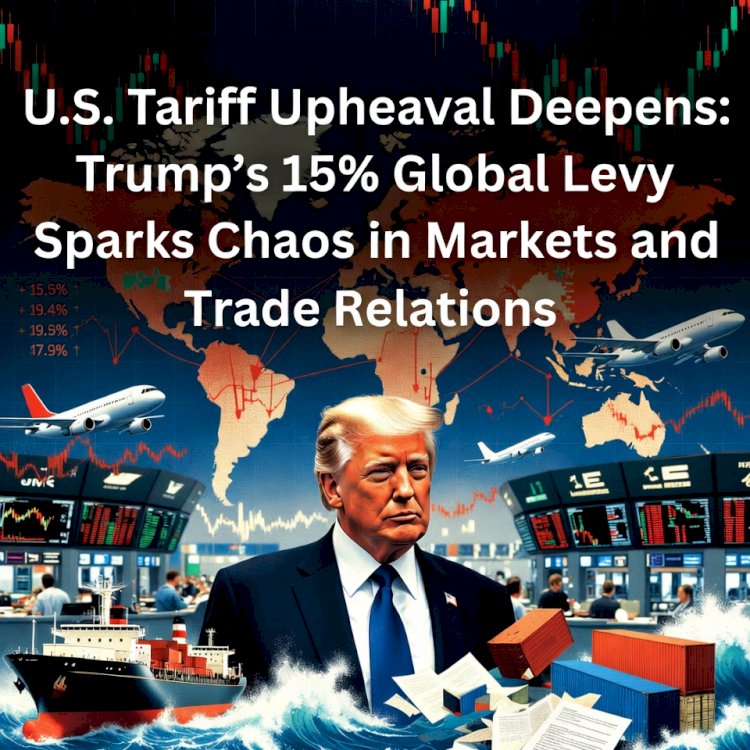
President Donald Trump’s sweeping 15% tariff on nearly all imports signed into law last weekend and effective March 1 has sent global supply chains, stock markets, and diplomatic relations into turmoil just days after implementation began. The broad levy, which applies to most goods except those from free-trade partners and a narrow list of exempted critical items, has already triggered retaliatory measures from China, the European Union, Canada, and Mexico, while U.S. consumers and businesses brace for higher prices.
U.S. Customs and Border Protection reported Monday that the new tariff collection system went live at midnight March 1, with duties now being assessed on more than $1.4 trillion in annual imports. Early data shows sharp increases in landed costs for consumer electronics (up 12–18%), apparel and footwear (15–22%), automobiles and parts (9–14%), and household goods (10–16%). Retailers including Walmart, Target, and Amazon have already announced price adjustments on thousands of items, with some categories seeing increases of 8–15% at the shelf.
The White House insists the tariffs will generate $380–420 billion in annual revenue to fund infrastructure, border security, defense modernization, and middle-class tax relief. Commerce Secretary Howard Lutnick told Fox Business: “This is America First in action. Foreign countries have exploited our open markets for decades. Now they pay their fair share or negotiate better terms.”
Retaliation and Market Fallout
China announced retaliatory tariffs of 25–50% on U.S. agricultural products, aircraft, semiconductors, and liquified natural gas within hours of the U.S. levy taking effect. The European Commission approved countermeasures targeting American whiskey, motorcycles, agricultural machinery, and tech products, effective April 1. Canada and Mexico invoked emergency USMCA consultations and signaled they would mirror U.S. tariffs on select goods if no exemptions are granted.
Global equity markets have been hammered. Since the executive order was signed February 21, the S&P 500 has fallen 4.7%, the Nasdaq Composite 6.1%, and the Dow Jones Industrial Average 3.9%. Import-heavy sectors retail, consumer discretionary, technology hardware, and autos led the declines, while domestic steel, aluminum, and defense stocks posted gains.
The U.S. dollar strengthened 2.3% against a basket of currencies, making imports even more expensive in dollar terms. Inflation expectations jumped, with the 5-year breakeven rate rising 28 basis points to 2.68% in the week following the announcement.
Political and Business Backlash
Republican congressional leaders have offered mixed support. Senate Majority Leader John Thune (R-SD) called the tariffs “a strong negotiating tool” but urged exemptions for critical inputs. House Speaker Mike Johnson (R-LA) defended the move as fulfilling campaign promises. Democrats, led by Senate Minority Leader Chuck Schumer and House Minority Leader Hakeem Jeffries, condemned the tariffs as “a massive tax on American families” and predicted widespread inflation.
Major business groups have mobilized against the policy. The U.S. Chamber of Commerce, National Retail Federation, Consumer Technology Association, and American Automotive Policy Council have formed a coalition demanding immediate exemptions and congressional hearings. Several large importers have filed lawsuits in the U.S. Court of International Trade challenging the executive order’s legality under recent Supreme Court precedents limiting broad tariff powers.
The White House has indicated it is open to case-by-case exemptions for allies who increase defense spending, reduce trade surpluses with the U.S., or crack down on intellectual property theft. Negotiations with Canada, Mexico, South Korea, and the European Union are already underway.
As prices begin to rise and retaliation spreads, the 15% global tariff has quickly become one of the most consequential and controversial economic policies of Trump’s second term. Economists warn of stagflation risks if the levies remain in place long-term, while supporters argue short-term pain is necessary to force fairer trade deals and revitalize American manufacturing. The coming weeks will reveal whether the policy survives legal challenges, international backlash, and domestic political pressure or becomes another flashpoint in an already polarized nation. Updates continue as implementation effects and retaliatory measures unfold.