Swords Drawn: The Fiery Clash Between China and Japan Over Taiwan's Fate
 content-team
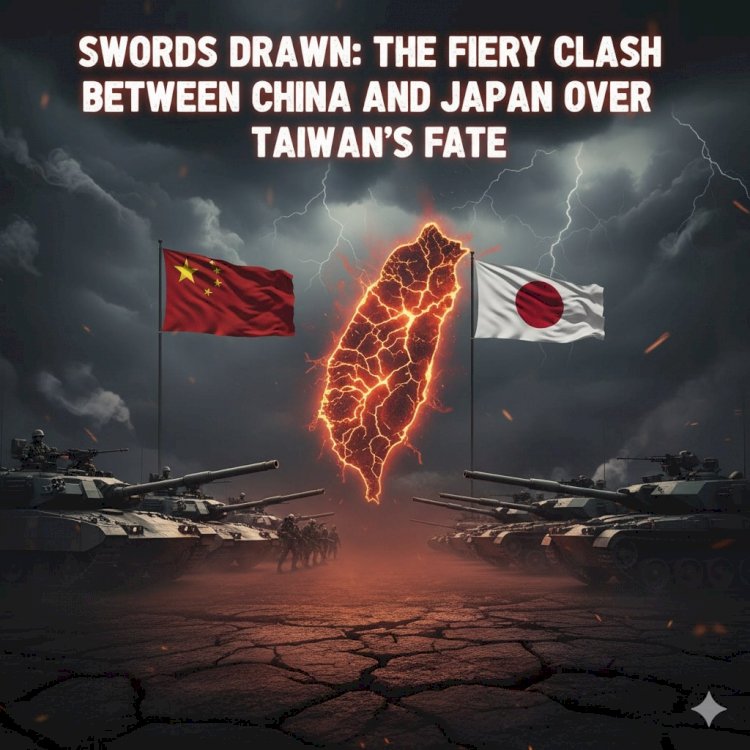
In the shadow of East Asia's fragile peace, a single statement from Tokyo's halls of power has unleashed a storm of rhetoric that echoes like thunder across the Taiwan Strait. As November's chill sets in, the air between Beijing and Tokyo crackles with unprecedented tension, turning diplomatic whispers into outright warnings of conflict. What began as a routine policy remark has spiraled into travel bans, ambassador summons, and veiled threats of military reckoning—reminding the world that old rivalries die hard.
A Trailblazer's Defiant Stance: Takaichi's Taiwan Gambit
Enter Sanae Takaichi, Japan's trailblazing first female prime minister, whose ascent to power just weeks ago promised a fresh era of assertive leadership. But her words on Taiwan have lit a fuse. In a bold address, Takaichi declared that any assault on the island democracy—widely seen as a proxy for Beijing's ambitions—could provoke a direct military response from Japan. "Our security is intertwined," she asserted, framing Taiwan not as a distant concern but as a frontline in Japan's own defense.
This isn't mere saber-rattling for Takaichi. It's a calculated pivot, building on alliances with the United States and a growing unease over China's naval maneuvers in the region. For a nation still scarred by its pacifist constitution, her rhetoric signals a willingness to redraw red lines, potentially pulling Japan deeper into the crosshairs of great-power rivalry.
Beijing's Roaring Counterpunch: Echoes of "Crushing" Retribution
China's response was swift and scorching, a masterclass in "wolf warrior" diplomacy that harks back to eras of unyielding confrontation. State media branded Takaichi's comments as a "revival of wartime militarism," dredging up ghosts of imperial Japan's aggressions to paint Tokyo as the aggressor once more. In a chilling escalation, official channels warned that any Japanese intervention in a Taiwan scenario would meet a "crushing" defeat—words laced with the weight of China's rapidly modernizing arsenal.
Diplomats moved like pieces on a Go board: Beijing summoned Japan's ambassador for a dressing-down, while online censors amplified a chorus of nationalist fury. The message? Cross this line, and the consequences will be swift and severe. It's a reminder that for China, Taiwan remains the unbreakable core of its reunification narrative, and any foreign meddling is an existential affront.
Stranded Suitcases: The Travel Ban That Freezes Ties
Nothing underscores the freeze like the ink still drying on China's latest advisory: a stark urging for its citizens to steer clear of Japan "in the near term." Issued amid the spat's peak, this isn't just bureaucratic caution—it's economic and cultural warfare by proxy. Millions of Chinese tourists, once a lifeline for Japan's recovery from economic slumps, now face second thoughts, with flights grounded and itineraries scrapped.
The ripple effects are immediate and intimate. Hot springs in Kyoto go quiet, sushi counters in Tokyo empty out, and bilateral trade—already strained by tech tariffs and fishery disputes—teeters further. For everyday people caught in the crossfire, it's a jarring shift from cherry blossom selfies to border-line paranoia, highlighting how elite posturing can upend lives in an instant.
Ghosts of Senkaku: Layered Tensions Beneath the Surface
This flare-up doesn't erupt in isolation; it's built on fault lines cracked open decades ago. The Senkaku Islands—known as Diaoyu to China—lurk as perennial flashpoints, with fishing boats and coast guard patrols dancing a dangerous tango in contested waters. Add to that Japan's bolstering of missile defenses and China's hypersonic tests, and the region feels like a powder keg primed for the slightest spark.
Takaichi's Taiwan talk amplifies these undercurrents, weaving security pacts with historical grievances into a tapestry of distrust. As both economies entwine—Japan reliant on Chinese manufacturing, China on Japanese tech—the stakes soar beyond bluster, threatening supply chains that pulse through the global heart.
Horizon of Hazards: Will Words Turn to Warfare?
As the sun rises on this November standoff, the question hangs heavy: Is this brinkmanship's peak, or the prelude to something darker? Optimists point to backchannel talks and shared economic perils that could cool the rhetoric. Pessimists, however, see a slide toward miscalculation, where a stray drone or errant patrol tips the balance.
For now, the world watches with bated breath, as two titans of Asia navigate a dance of deterrence. In the end, the true test won't be the volume of threats exchanged, but the wisdom in choosing dialogue over the abyss. One wrong step, and the ripples could drown the region in waves of uncertainty.