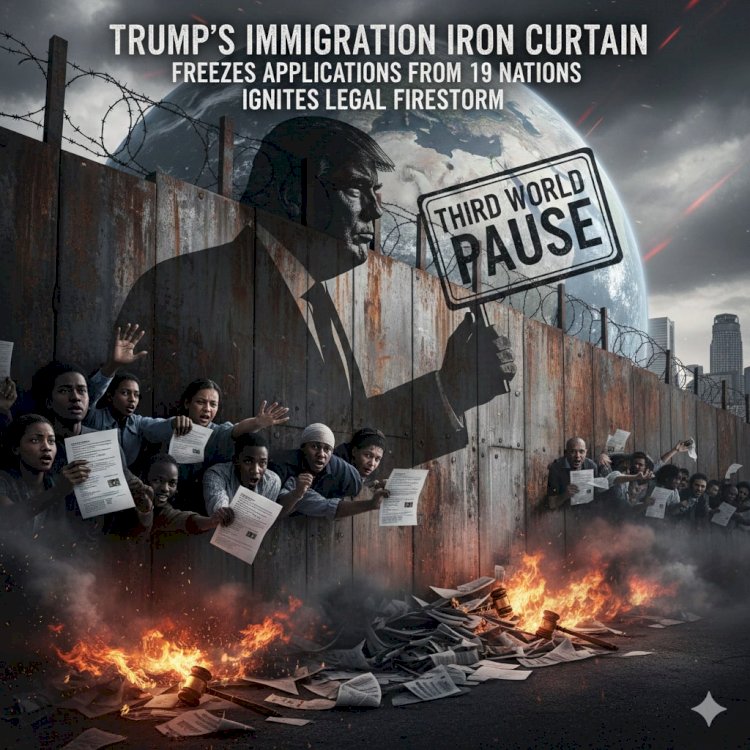
Trump's Immigration Iron Curtain: "Third World Pause" Freezes Applications from 19 Nations, Ignites Legal Firestorm
 content-team
The Trump administration dropped a policy bombshell on December 2, 2025, slamming the brakes on all immigration applications from 19 "high-risk" countries in a sweeping crackdown that has left thousands of legal migrants in limbo and sparked immediate lawsuits from civil rights groups. Citing national security threats exposed by the fatal shooting of National Guard Specialist Emily Thompson by an Afghan asylum seeker near the White House last week, U.S. Citizenship and Immigration Services (USCIS) issued a memo halting green card approvals, citizenship naturalizations, and asylum adjudications for applicants from nations already under travel bans. The move—dubbed the "Third World Pause" by critics—marks the boldest expansion of Trump's immigration agenda since his return to office, targeting some of the world's poorest and most unstable countries and exposing even long-term residents to re-interviews and potential deportation.
From DC Tragedy to Nationwide Freeze: The Directive's Drastic Scope
The USCIS guidance, effective immediately, pauses processing for immigrants from Afghanistan, Myanmar, Chad, Republic of Congo, Equatorial Guinea, Eritrea, Haiti, Iran, Libya, Somalia, Sudan, and Yemen—full travel ban nations—along with partial restrictions on Burundi, Cuba, Laos, Sierra Leone, Togo, Turkmenistan, and Venezuela. Unlike the June proclamation that barred new entries, this targets those already in the U.S.: pending green cards, naturalization ceremonies mid-oath, and asylum claims frozen in bureaucratic ice. Within 90 days, USCIS must compile a "prioritized list" for re-vetting, including interviews and referrals to ICE or FBI if "threats" emerge—potentially revisiting approvals back to 2021.
"This is the final reckoning for Biden's porous borders," Trump declared at a Mar-a-Lago presser, linking the pause to Rahmanullah Lakanwal's November 26 ambush that killed Thompson and critically wounded Sergeant Marcus Hale. Lakanwal, granted asylum in April 2025 after fleeing Taliban rule, allegedly carried a manifesto railing against U.S. policy—fuel for Trump's narrative of "imported terror." USCIS Director Joseph B. Edlow, in the memo, justified the hold as balancing "processing delays" against "urgent national security obligations," estimating impacts on 100,000+ cases.
Immigration attorneys reported chaos: a Somali green card interview in Minneapolis canceled mid-question; a Haitian nurse in Miami turned away from her citizenship oath; an Iranian engineer in California notified of re-interview. "It's not a pause—it's paralysis for vetted families," fumed NILC's Ahilan Arulanantham.
"America First Fortress": The Broader Blueprint Unfolds
Trump's edict is the vanguard of a multi-pronged assault. On December 3, Homeland Security Secretary Kristi Noem announced plans to expand the list to "over 30 countries," tying it to "criminal activity" like Tren de Aragua gangs. The "Secure America Act," ramrodded through reconciliation, eyes ending birthright citizenship, slashing family visas by 50%, and mandating E-Verify nationwide. "Citizenship for the best—loyal contributors, not liabilities," Trump reiterated, echoing Project 2025's merit overhaul while floating denaturalization for "security risks."
Noem's border blitz adds teeth: 10,000 new agents, AI walls from Texas to Arizona, Caribbean fleets hunting narco-boats. Venezuela's Cartel de los Soles, Maduro's alleged military-drug arm, got terrorist designation, unlocking lab strikes and $50 million bounties. "Maduro funds terror—we dismantle it," Noem vowed, linking to U.S. fentanyl deaths.
White House Press Secretary Karoline Leavitt framed it as "targeted safeguards," not bans: "Post-tragedy necessities." Yet the net ensnares the vulnerable: Somali entrepreneurs in Minnesota, Afghan interpreters in Seattle, Haitian nurses fleeing gangs—all paused, probed, possibly deported.
Lawsuits Lightning: Courts, Allies, and America's Fractured Frontline
The backlash is biblical. ACLU, NILC, and MALDEF sued in the Ninth Circuit December 2, alleging INA breaches and due process violations. "Mass punishment for one act—revoking lives on a whim," ACLU's Lee Gelernt blasted on MSNBC, eyeing SCOTUS by spring. DACA shielded for now, but whispers of expansion chill. A federal judge blocked a "public charge" tweak December 1, but appeals brew.
Allies splinter: Colombia's Petro decried "refugee bombs," Brazil's Lula warned hemispheric havoc, EU envoys fretted rifts. GOP cracks show: Collins and Murkowski urged "hero carve-outs" for Afghan SIVs. Trump's base roars: Rasmussen polls 65% approval, 82% GOP.
Limbo's Lament: Lives on the Line
The toll tolls personal. Seattle's Fatima, Afghan SIV limbo: "Saved U.S. lives—now doubted?" Miami's Haitian nurse: "Fled gangs for this?" Thompson's kin, in CNN op-ed: "Justice, not vengeance—don't punish innocents." Hale, scarred but stable, silent.
Sanctuary or Siege? The Border's Brutal Reckoning
December deepens Trump's fortress test: bulwark or barricade? Midterms loom, courts convene, pause could thaw—or harden. For 11 million undocumented, legions queued, deferred dreams, deported dignity.
White House shadow, Guards patrolled in peace, shots echo policy's prelude. Trump's wall ascends, splintered cost? Republic reckons, divided delta.