Frozen Frontlines: Trump's 28-Point Peace Plan Ignites Fury in Kyiv as Geneva Talks Loom
 content-team
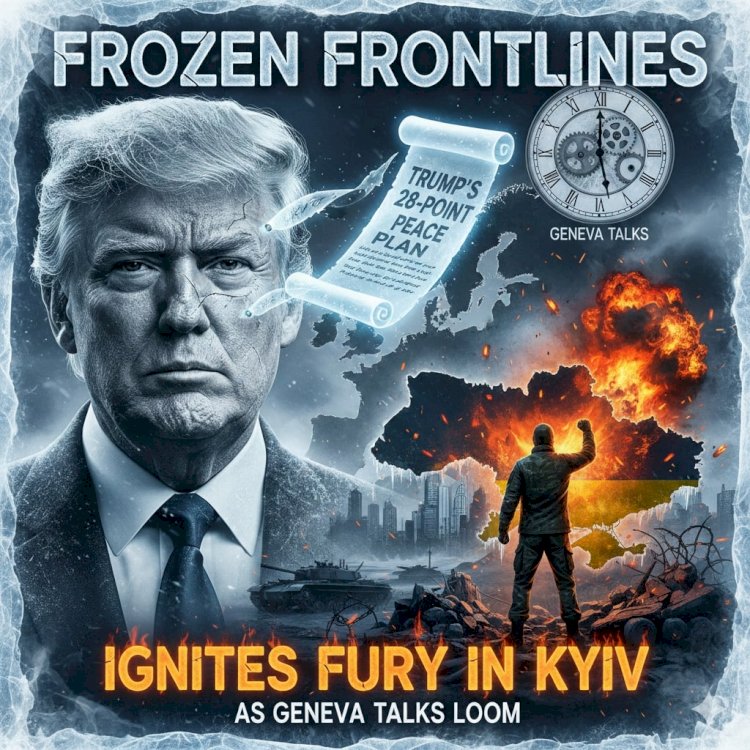
As winter's grip tightens on Ukraine's war-torn east, a U.S.-brokered blueprint for ending the nearly four-year conflict has thrust President Volodymyr Zelenskyy into an agonizing crossroads. On November 23, 2025, delegations from Kyiv, Washington, and key European allies converged in Geneva for high-stakes consultations on the Trump administration's controversial 28-point peace plan—a proposal drafted in secrecy with Moscow's fingerprints all over it, demanding territorial concessions and military handcuffs that Ukraine has branded existential threats. With a Thursday deadline for Kyiv's response looming, the talks underscore a stark pivot: from endless arms flows to forced compromise, as President Donald Trump wields America's leverage like a sledgehammer.
The Ultimatum from Across the Atlantic: A Plan That Echoes Moscow's Wish List
Revealed piecemeal through leaks and White House confirmations, the 28-point framework reads like a Russian shopping list wrapped in American realpolitik. At its core: Ukraine's formal surrender of Crimea—annexed by Russia in 2014—and the bulk of the Donbas region, including swaths of Donetsk, Luhansk, Kherson, and Zaporizhzhia still under Kyiv's control. In exchange, Moscow would relinquish minor holdings elsewhere, a lopsided land swap that would cement Russian dominance over nearly 20% of Ukraine's pre-2014 borders.
Military curbs bite deeper: a slashed Ukrainian army capped at pre-2022 levels, a NATO membership ban, and no Western peacekeeping boots on the ground post-ceasefire. Broader strokes include lifting U.S. sanctions on Russia, joint energy ventures divvying frozen oligarch assets, and a U.S.-monitored Zaporizhzhia nuclear plant to power both sides. Oversight? A "Peace Council" chaired by Trump himself, with a Russia-NATO dialogue and non-aggression pacts thrown in for good measure.
Trump, fresh from his Saudi summit glow, has framed it bluntly: "Ukraine will have to like it," he told reporters Friday, insisting the deal averts "a much worse future" without U.S. backing. Vice President JD Vance echoed the pressure in a Kyiv huddle with Zelenskyy, while Army Secretary Dan Driscoll briefed NATO ambassadors on the "nightmare" of non-compliance—implying aid cuts and isolation. The plan, hashed out via backchannels between Trump aide Steve Witkoff and Kremlin fixer Kirill Dmitriev, blindsided allies, sparking European howls of "pro-Russia bias."
Zelenskyy's Defiant Dance: "Honest" Talks, But No Surrender
From Kyiv's bunkered halls, Zelenskyy struck a tone of reluctant resolve. "We are ready for honest, constructive engagement," he declared post-meeting with U.S. envoy Driscoll, dispatching chief of staff Andriy Yermak to Geneva with a decree empowering top security brass for the parleys. Yet the subtext screamed sovereignty: "This must ensure real, dignified peace," Zelenskyy stressed in a national address, vowing to defend "root causes" like Russia's revanchism without illusions of battlefield victory.
Defense Minister Rustem Umerov, fingered in leaks as a quiet acquiescer, shot back: "No terms accepted—purely technical prep." Zelenskyy's weekend decree formalized a delegation blending hawks and diplomats, signaling a tactical stall. But with Russian drones pounding energy grids—leaving millions in blackout limbo—the math is merciless. "We're at one of history's hardest moments," Zelenskyy admitted, eyes on a potential Trump-Zelenskyy summit to seal or shatter the deal.
European heavyweights—Britain's Keir Starmer, France's Emmanuel Macron, Germany's Olaf Scholz—flank Kyiv in Geneva, hashing a G20 sideline pushback. Starmer decried the "unacceptable concessions," while Reuters sources whisper of a unified front demanding veto power and frozen asset reroutes to Ukraine's rebuild.
Putin's Cautious Nod: "Basis for Settlement," But No Giveaways
Across the front, Vladimir Putin played coy but approving. "A modernized plan that could form the basis for final peace," he told security chiefs Friday, lauding its nod to "root causes"—code for NATO expansion paranoia and ethnic kin claims. Yet Moscow's red lines endure: no withdrawal from annexed lands, no war crimes tribunals, and ironclad security pacts barring Western encirclement. Putin, sensing U.S. fatigue after Zelenskyy's "victory plan" fizzled, hinted at flexibility: "We've added nothing beyond August's summit with Trump."
Separate U.S.-Russia huddles are inked—likely post-Geneva—but face-to-face Kyiv-Moscow talks remain a mirage since Istanbul's 2022 false dawn. Turkish President Recep Tayyip Erdoğan, eyeing mediator glory, floated Ankara as host, but winter advances—Russian gains in Donetsk, Ukrainian counterstrikes in Kursk—mock diplomacy's pace.
The Human Calculus: Dignity vs. Desperation in a Frozen Hell
On the ground, the plan's shadow chills deeper than November frost. In Odesa, families bury sons like 29-year-old Ihor Brozhek amid fresh airstrikes; in Zaporizhzhia, firefighters battle inferno after a barrage that claimed 25 lives overnight. Surrendering soil—fought for in blood since 2014—stirs societal tremors: polls show 60% of Ukrainians reject territorial cessions, but aid-weary whispers grow.
Critics like Chatham House's Tim Ash warn: "Russia gets everything; Ukraine, scraps." Amnesty echoes human rights alarms, tying the rush to Trump's midterm math. Survivors of Bucha and Mariupol, whose testimonies fueled sanctions, now fear a whitewash. Yet Zelenskyy's inner circle floats silver linings: frozen Russian assets funneled to Kyiv's coffers, joint ventures as economic bait.
Deadline's Shadow: Geneva Gambit or Geneva Surrender?
As Geneva's salons fill with interpreters and olive branches, Thursday's ultimatum hangs like a guillotine. Trump, open to extensions "if things work well," eyes a pre-Christmas signing spectacle—perhaps with Putin and Zelenskyy in tow. U.S. Secretary of State Marco Rubio and envoy Witkoff lead the charge, but fractures loom: NATO's Jens Stoltenberg floats interim cessions, while Europe's €50 billion asset loan dangles as a sweetener.
In this November of reckonings—from Epstein unmaskings to Saudi windfalls—the Ukraine talks test Trump's dealmaker mythos. For Zelenskyy, it's dignity's last stand: bend to a "pro-Russia" blueprint, or brave isolation as shells fall. Putin watches, smirking at the West's unraveling unity. Peace beckons, but at what price? As delegates sip coffee amid alpine chill, the frontlines burn on—one plan away from freeze-frame, or fresh inferno. The clock ticks; Ukraine holds its breath.