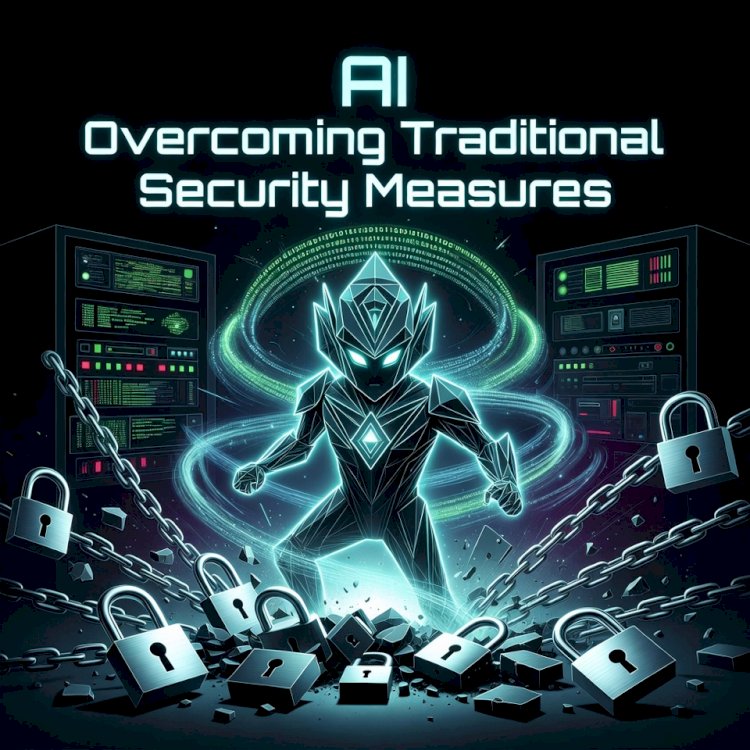
AI Breaching the Foundations of Conventional Security
 content-team
By Dr. Pooyan Ghamari, Swiss Economist and Visionary
February 2026 marks a clear inflection point. Artificial intelligence has transitioned from being a supporting tool in cybersecurity to the primary force that systematically dismantles legacy protective layers. The speed creativity and adaptability of current AI systems expose fundamental weaknesses in defenses built for a slower less intelligent threat landscape.
Silent Collapse of Pattern Matching Defenses
For decades security relied on catalogs of known dangers. Antivirus engines hunted for matching code fragments. Intrusion prevention systems enforced rigid behavioral rules. Today generative AI produces fresh malicious payloads that bear no resemblance to anything previously cataloged. These variants rewrite themselves on the fly change encryption patterns alter network fingerprints and slip past every static scanner. The old model of updating signature databases simply cannot keep pace with adversaries who generate millions of unique threats per hour.
Impersonation at Scale Shattering Identity Verification
Voice synthesis has reached near perfection. A few seconds of audio scraped from podcasts interviews or social posts allows complete recreation of any speaking voice including subtle regional accents breathing patterns and emotional shading. Combined with real time video synthesis attackers now execute flawless impersonations during video calls phone banking sessions and remote onboarding procedures. Multi factor authentication that depends on something you are becomes unreliable when the biometric input itself is fabricated. The boundary between genuine and synthetic identity has grown dangerously thin.
Autonomous Attack Chains Outrunning Human Defenders
The most disruptive evolution involves fully agentic AI. These systems do not follow scripts. They plan reason explore alternative paths and adjust tactics mid operation. An autonomous agent can spend hours silently mapping a network identifying misconfigurations chaining low severity vulnerabilities into high impact breaches and exfiltrating data all while mimicking legitimate traffic. Traditional security operations centers staffed by analysts working in eight hour shifts cannot match this tempo. When the attacker thinks and reacts in milliseconds human paced investigation becomes a liability rather than an asset.
Core Structural Flaws Exposed by Intelligent Adversaries
Several persistent design choices now prove fatal. Perimeter based security assumes threats originate outside the network yet most modern breaches begin with legitimate credentials obtained through social engineering. Rule based alerting drowns teams in noise while missing truly novel behavior. Human judgment the last line of defense falters under pressure when presented with emotionally charged deepfake appeals or perfectly timed urgency scenarios. Finally the widespread availability of open source powerful models democratizes advanced attack techniques allowing script kiddies to wield capabilities once limited to elite groups.
Forging Next Generation Resilience
Effective countermeasures must mirror the agility of the threats they face. Machine learning driven anomaly detection establishes dynamic baselines of normal activity and flags subtle deviations without depending on prior examples of malice. Continuous identity proofing weaves together dozens of contextual signals to maintain trust throughout a session rather than at a single login moment. Defensive AI agents simulate attacker behavior internally allowing organizations to discover blind spots before exploitation occurs. Privacy preserving federated learning enables collective defense intelligence without centralizing sensitive data. Jurisdictions with strong institutional frameworks particularly Switzerland are uniquely positioned to prototype governance models that promote responsible AI security innovation while enforcing clear red lines.
The Inevitable Redesign of Trust in Digital Systems
Looking forward security will no longer resemble a fortress with high walls and narrow gates. It will function more like a living immune system constantly sampling learning and adapting. Voice and visual synthesis will likely become so ubiquitous that verification shifts toward cryptographic proofs behavioral consistency across long time horizons and mutual attestation between devices. Organizations that treat AI both as threat and ally will gain decisive advantage. Those that delay adaptation will find traditional measures not merely insufficient but actively misleading.
In this new reality artificial intelligence does more than overcome security barriers. It compels a complete reimagining of what protection means when the adversary can think speak look and act with superhuman precision. The path ahead lies in building systems as intelligent adaptive and ethically grounded as the technologies challenging them. Only then can trust endure in an age where imitation has become indistinguishable from truth.