Poland Bans Chinese-Made Electric Vehicles from Government Fleets in Security Crackdown
 content-team
February 18, 2026
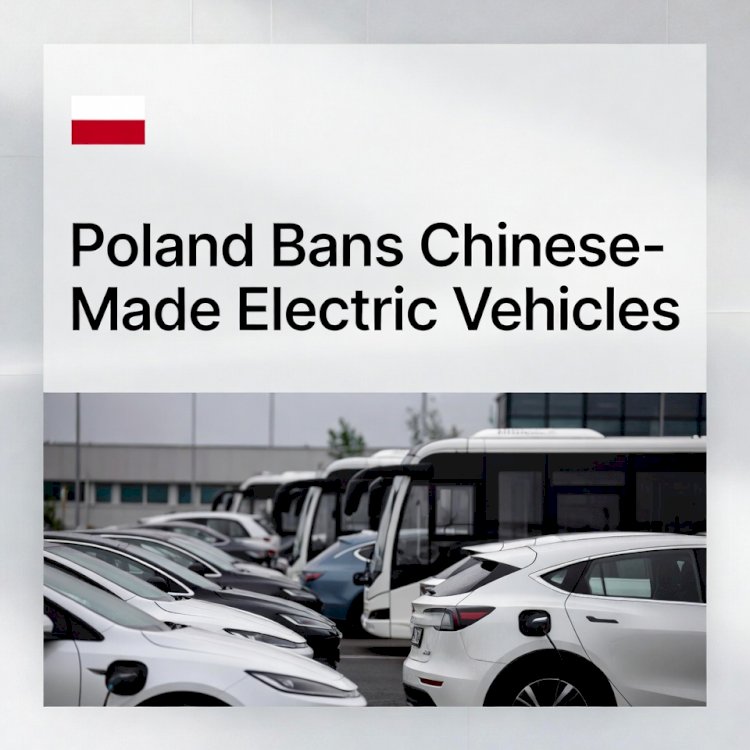
Poland has become the first European Union member state to impose a blanket ban on Chinese-manufactured electric vehicles in public sector procurement, with the government announcing today that no new Chinese EVs will be purchased for official use by ministries, state agencies, local governments, or publicly owned companies. The decision, effective immediately, cites national security risks related to data collection, remote access capabilities, and potential vulnerabilities in connected vehicle systems.
Prime Minister Donald Tusk's cabinet approved the policy following a classified assessment by the Internal Security Agency (ABW) and consultations with NATO allies. The ban applies to all passenger cars, light commercial vehicles, and buses of Chinese origin or with Chinese-manufactured core components (battery, telematics, autonomous driving systems) regardless of final assembly location.
“Poland will not allow sensitive public infrastructure to be dependent on technology from a country that does not share our values and security standards,” Tusk said in a televised address. “This is not about trade discrimination; it is about protecting our citizens and critical systems from hidden risks.”
Scope and Implementation
The prohibition covers:
- All future vehicle purchases and leases by central and local government entities
- State-owned enterprises (energy, transport, postal services, railways)
- Police, fire service, ambulance, and military non-combat vehicles
- Existing Chinese EVs already in public fleets must be phased out by the end of 2028 or retrofitted to remove connected features deemed high-risk
Exemptions are limited to diplomatic vehicles and emergency humanitarian aid transport. Private citizens and companies are not affected by the ban.
The policy aligns with recent EU-level discussions on connected vehicle cybersecurity but goes further than current Union-wide measures. Poland joins the United States, Canada, and several other NATO members that have already restricted or banned Chinese EV brands (BYD, NIO, Xpeng, Zeekr, etc.) from government and critical infrastructure use.
Industry and Diplomatic Reactions
Chinese Embassy in Warsaw issued a statement expressing “strong dissatisfaction” and urging Poland to “avoid politicizing economic and trade issues.” Beijing warned that the move could harm bilateral relations and “set a dangerous precedent” within the EU.
European Commission officials noted that while member states have discretion over public procurement criteria, any outright national ban on a specific country’s products must comply with EU single market rules and WTO obligations. A formal request for clarification has been sent to Warsaw.
BYD, the largest Chinese EV exporter to Europe, called the decision “discriminatory and protectionist” and said it would continue normal commercial operations in Poland’s private market. Several European automakers welcomed the move, arguing it levels the playing field against subsidized Chinese competition.
Poland’s electric vehicle market remains small (around 3% of new registrations in 2025), with Chinese brands holding roughly 12% share. The ban is expected to have limited direct economic impact domestically but sends a strong political signal.
Broader Context
The decision follows months of heightened concern across NATO capitals about connected vehicle data flows, remote kill switches, and mapping capabilities that could be exploited for intelligence purposes. Similar restrictions are already in place for Chinese telecom equipment (Huawei, ZTE) in critical infrastructure across much of the alliance.
Poland’s move is likely to influence discussions at the upcoming EU Council summit and could encourage other Central and Eastern European states to adopt comparable policies. The Ministry of Digital Affairs has indicated that technical guidelines for “secure vehicle procurement” will be published next month.
With the ban now in force, Poland positions itself at the forefront of efforts to reduce strategic dependencies on Chinese technology in sensitive sectors, even as private consumers retain full access to Chinese EVs in the open market.