Breakthrough in the Horn of Africa: Israel Becomes First Nation to Recognize Somaliland's Independence
 content-team
December 27, 2025
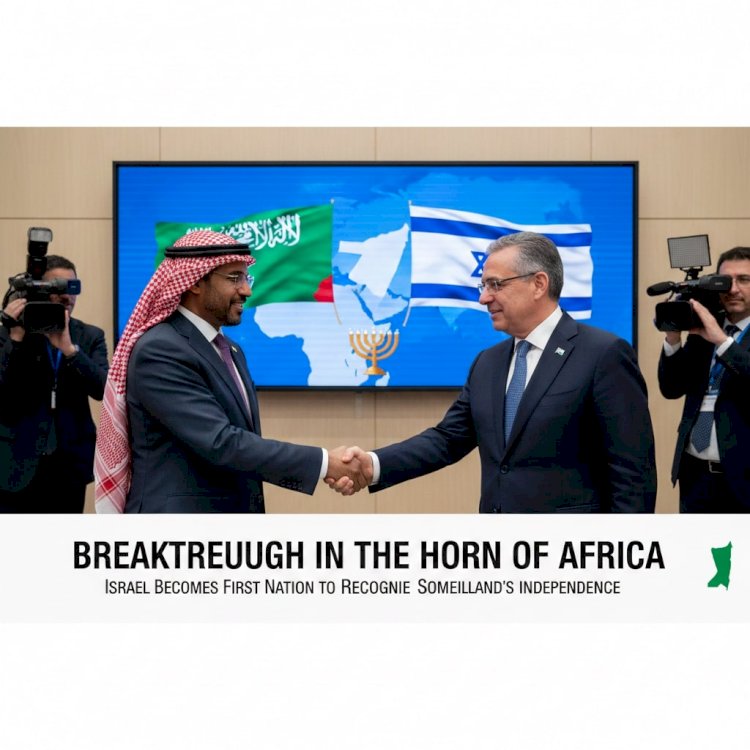
In a historic diplomatic shift, Israel has formally recognized the Republic of Somaliland as a sovereign and independent state, marking the first time any United Nations member has extended such acknowledgment to the breakaway region more than three decades after its declaration of independence.
Mutual Recognition Signed: A New Chapter Opens
The landmark agreement was announced on December 26, with Prime Minister Benjamin Netanyahu and Foreign Minister Gideon Sa’ar signing a joint declaration alongside Somaliland President Abdirahman Mohamed Abdullahi during a video conference call.
Netanyahu described the move as being "in the spirit of the Abraham Accords"—the U.S.-brokered normalization deals that expanded Israel's ties with several Arab nations—and praised Somaliland's leadership for promoting stability and peace. He extended an invitation for Abdullahi to visit Israel soon and pledged immediate cooperation in agriculture, health, technology, and economic development.
Somaliland's president hailed the recognition as a "historic moment," expressing eagerness to join the Abraham Accords and build a strategic partnership for mutual prosperity and regional security.
Somaliland's Long Road to Recognition
Somaliland, a former British protectorate, briefly enjoyed independence in 1960—during which Israel was among the 35 countries that recognized it—before uniting with Somalia. It unilaterally declared independence again in 1991 amid Somalia's descent into civil war, establishing a functioning government with its own currency, passports, elections, and relative stability.
Despite these achievements and informal ties with nations like the UK, Ethiopia, Turkey, UAE, and Taiwan, Somaliland has remained diplomatically isolated, with no formal recognition from any UN member until now.
Israeli officials credited years of quiet engagement, including Mossad involvement, for paving the way, viewing the partnership as a boost to counterterrorism efforts and regional alignment.
Storm of Condemnation from Somalia and Allies
The decision triggered immediate outrage from Somalia, which views Somaliland as an integral part of its territory. Mogadishu's government denounced the move as an "unlawful step" and "deliberate attack" on its sovereignty, vowing to pursue diplomatic, political, and legal measures to defend its unity.
The African Union swiftly rejected the recognition, warning it sets a "dangerous precedent" with far-reaching implications for continental peace and reaffirming Somaliland as part of Somalia.
Egypt, Turkey, Djibouti, and the Arab League echoed the criticism, framing it as interference and a threat to territorial integrity. Joint statements emphasized solidarity with Somalia and opposition to recognizing breakaway regions.
Strategic Implications in a Volatile Region
Somaliland's location on the Gulf of Aden, near critical shipping lanes and opposite Yemen's Houthi-controlled areas, adds geopolitical weight to the accord. Analysts suggest it enhances Israel's strategic footprint in the Horn of Africa, potentially aiding monitoring of Red Sea threats.
For Somaliland, the breakthrough could unlock international markets, investment, and further recognitions, bolstering its de facto statehood.
Global Reactions and the Path Ahead
While the U.S.—under President Donald Trump, architect of the original Abraham Accords—has signaled interest in closer ties with Somaliland, no immediate follow-up recognition has been announced.
As embassies and ambassadors are planned, this bold step tests international norms on sovereignty, potentially reshaping alliances in Africa and the Middle East.
In a region long defined by conflict and isolation, Israel's pioneering recognition spotlights Somaliland's resilience—while igniting fierce debate over borders, stability, and the evolving map of global diplomacy.
The world now watches to see if others will follow Israel's lead, or if the backlash reinforces the status quo.